

 English
 русский
 عربى
عربىتلتزم شركة شينليانغ للآلات دائمًا بفلسفة العمل "الإنسان أولاً، العميل أولاً، الإدارة النزيهة، والتعاون المربح للجميع".
من خلال التحكم في محرك المؤازرة ، باستخدام معالج ثلاثي المحاور ، وبرمجة البرنامج ، والاندماج مع معدا...
انظر التفاصيلمحتوى
The key benefits of polyurethane high pressure foaming injection machines in 2026 are precise mixing ratios, faster cycle times, consistent cell structure, lower material waste, and compatibility with a broader range of polyurethane formulations — including cyclopentane-blown systems demanded by energy efficiency regulations. These advantages directly translate to higher product quality, lower production cost per unit, and the ability to meet increasingly strict insulation performance standards across refrigeration, construction, and automotive applications.
This article details each benefit with specific performance data, explains how high pressure foam injection technology works, and provides practical guidance for selecting the right polyurethane injection system for your production environment.
Understanding the fundamental difference between high and low pressure foaming is essential before evaluating the benefits. In a polyurethane high pressure foaming injection machine, the two reactive components — polyol and isocyanate — are metered under pressures of 100–200 bar and mixed by impingement directly inside the mixhead. There is no mechanical mixing element; the energy of the high-velocity streams creates a homogeneous mixture.
In contrast, low pressure systems mix components at 2–10 bar using mechanical stirrers, which introduces several limitations:
High pressure foaming machines eliminate these constraints through impingement mixing — producing a cleaner, more repeatable result with zero solvent consumption and self-cleaning mixhead operation.
The polyol-to-isocyanate ratio (index) is the single most critical variable in polyurethane foam production. A deviation of just 2–3% from the target index changes the foam's compressive strength, thermal conductivity, and dimensional stability in measurable ways. Modern polyurethane injection systems achieve ratio accuracy of better than ±1% at flow rates from 100 g/min to 30 kg/min — a consistency that is physically impossible with manual mixing or basic low-pressure equipment.
This precision is achieved through:
High pressure foaming machines are designed for continuous, high-volume production. The self-cleaning impingement mixhead opens and closes in under 0.1 seconds, with no solvent flush required between shots. This compares to 30–90 seconds of cleaning time per shot for mechanical mixer low-pressure systems — a difference that compounds significantly across a production shift.
| Parameter | High Pressure Foaming Machine | Low Pressure System |
|---|---|---|
| Operating pressure | 100–200 bar | 2–10 bar |
| Mixing method | Impingement (solvent-free) | Mechanical mixer |
| Inter-shot cleaning time | 0 seconds (self-cleaning) | 30–90 seconds |
| Ratio accuracy | ±1% | ±3–5% |
| Max output rate | Up to 30+ kg/min | Up to 8 kg/min |
| Solvent consumption | Zero | High (per shot) |
For a production line running 300 shots per day, eliminating 60 seconds of cleaning per shot recovers 5 hours of productive machine time daily — equivalent to adding more than half a production shift without any capital investment in additional equipment.
The quality of a polyurethane foam part is determined by the uniformity of its cellular structure. Uniform, fine cells produce lower thermal conductivity, higher compressive strength per unit weight, and better dimensional stability than coarse or irregular cell structures — even at identical foam density.
High pressure impingement mixing produces consistently fine, uniform cells because:
Thermal Conductivity (mW/m·K) — High Pressure vs. Low Pressure Foaming
Figure 1: High pressure foaming machines consistently produce lower thermal conductivity and more uniform cell structure (lower CV) across foam applications
Regulatory pressure on HFC blowing agents has made cyclopentane the standard blowing agent for rigid polyurethane foam in refrigeration and cold chain applications across the European Union, China, and increasingly in North America. Cyclopentane presents unique handling challenges — it is highly flammable and requires purpose-engineered foam injection technology to handle safely and effectively.
Polyurethane high pressure foaming injection machines designed for cyclopentane incorporate:
Manufacturers using cyclopentane-capable polyurethane injection systems can achieve foam lambda values below 20 mW/m·K — meeting the most demanding EU energy efficiency standards for refrigeration appliances (ErP Regulation 2019/2016).
Polyurethane raw materials represent a significant fraction of total production cost in foam manufacturing. Reducing material waste by even 3–5% per shot has a substantial cumulative impact on operating economics. High pressure foaming machines contribute to material efficiency in three distinct ways:
Because impingement mixheads are self-cleaning, there is no reactive material left in the mix chamber between shots. Low-pressure mechanical mixers must be purged after each shot, wasting 20–80 grams of mixed material per purge — equivalent to 6–24 kg of wasted material per 300-shot production day.
PLC-controlled injection timing in modern high pressure foaming machines achieves shot-to-shot weight repeatability of better than ±0.5%. This precision allows manufacturers to reduce the overfill safety margin typically added to ensure mold fill — recovering 2–4% of raw material per production run without any risk of underfilled parts.
The ratio accuracy and consistency of high pressure foam injection technology reduces the rate of off-specification parts — those rejected for density variation, cell structure irregularity, or dimensional deviation — to below 0.5% in well-maintained systems, compared to 2–5% typical for low-pressure lines. Every percentage point reduction in reject rate directly recovers material, energy, and labor cost.
Material Waste Reduction (%) After Transition to High Pressure Foaming System
Figure 2: Material waste rate declining over six months following transition from low-pressure to high pressure foaming injection system
Selecting the right high pressure foaming machine for your production line requires evaluating several interdependent technical parameters. Address these in order to avoid undersizing or over-specifying your investment:
Ningbo Xinliang Machinery Co., Ltd. is an enterprise combining industry and trade, dedicated to producing polyurethane foaming equipment, polyurethane foaming production lines, and cyclopentane polyurethane foaming complete equipment. As a professional high-tech enterprise specializing in polyurethane foaming equipment research and development, manufacturing, and technical services, Xinliang Machinery has built more than ten years of specialized experience in R&D — with engineering teams familiar with advanced foam injection technology at home and abroad.
As a professional Custom Polyurethane High Pressure Foaming Injection Machine Supplier and OEM Company, Xinliang Machinery leverages Zhejiang's strong industrial foundation and location advantages to pursue a development path of scientific and technological innovation and specialization. The company focuses on providing customized polyurethane injection system solutions for users across the polyurethane industry — from refrigeration and construction insulation to automotive and furniture foam manufacturing.
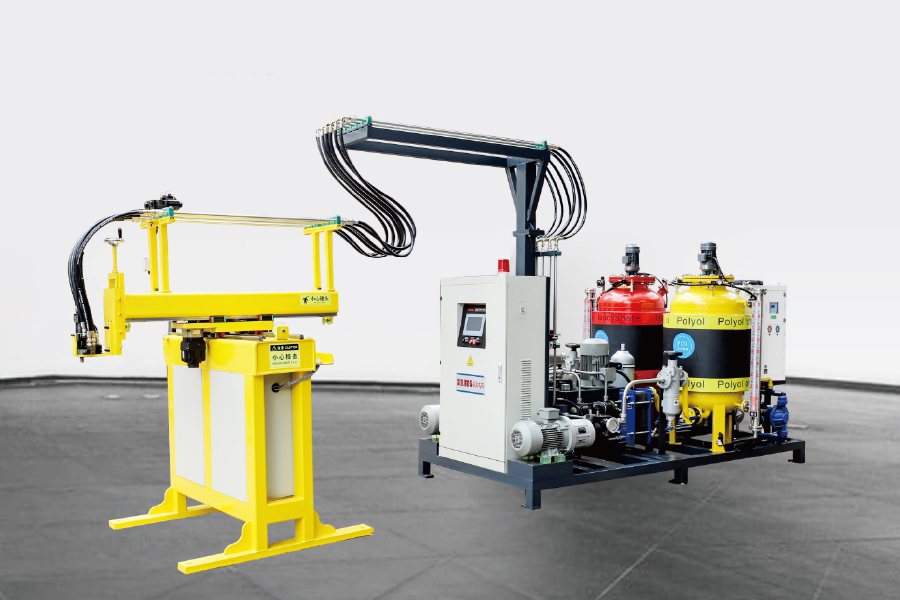
من خلال التحكم في محرك المؤازرة ، باستخدام معالج ثلاثي المحاور ، وبرمجة البرنامج ، والاندماج مع معدا...
انظر التفاصيل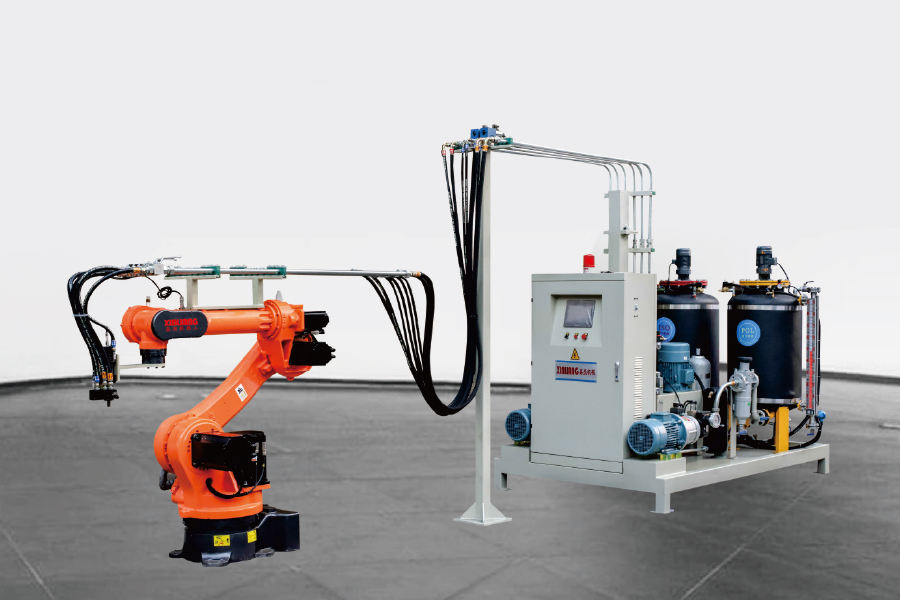
يمكن تخصيص العلامة التجارية الروبوت ، ويتم استخدام المعالج المكون من ستة محاور. إنه مناسب للجمع ب...
انظر التفاصيل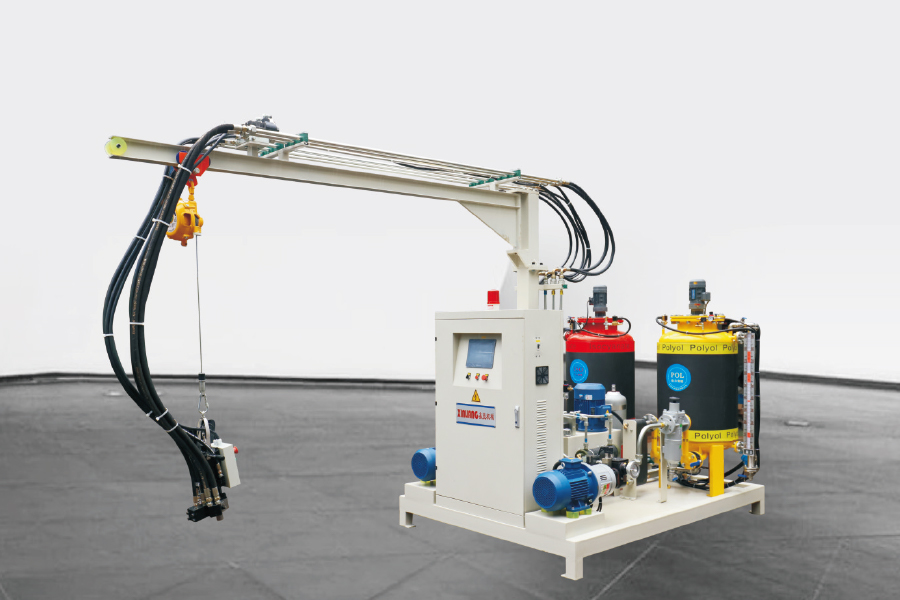
تستخدم آلة حقن البولي يوريثان عالية الضغط عالي الضغط ذراع الروك لحقن الدوران 180 درجة. يمكن تخصيص...
انظر التفاصيل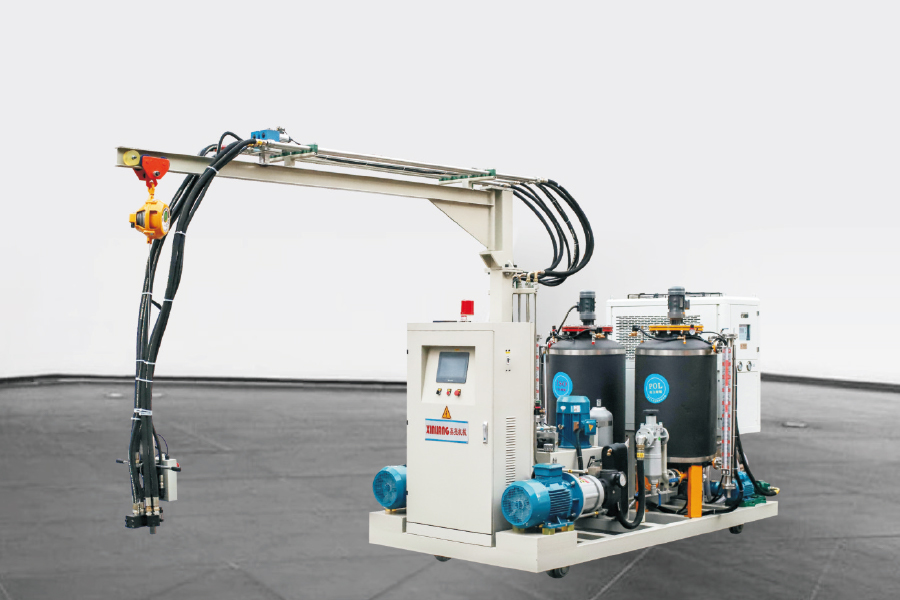
يحتوي آلة حقن الرغوة ذات الضغط العالي المكون من المكونات ذات المكون المكون مع المسار على نفس التك...
انظر التفاصيل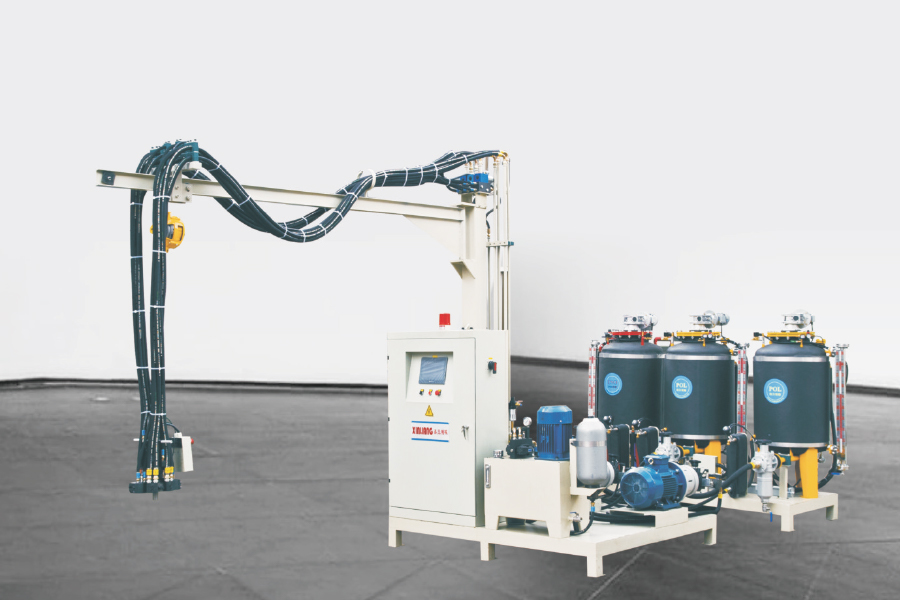
تحتوي آلة حقن الرغوة ذات الضغط العالي المكون من ثلاثة مكونات على خزان ISO 1 و 2 خزانات بولي. يمكن...
انظر التفاصيل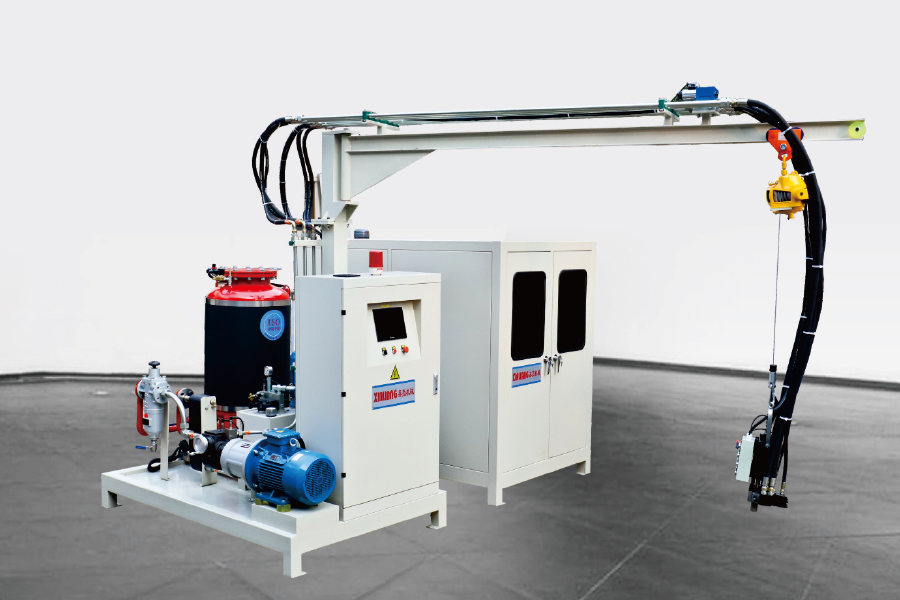
سيكلوبنتان البولي يوريثان ، آلة حقن الرغوة عالية الضغط يعني أن بولي يحتوي على السيكلوبنتان. المواد ا...
انظر التفاصيل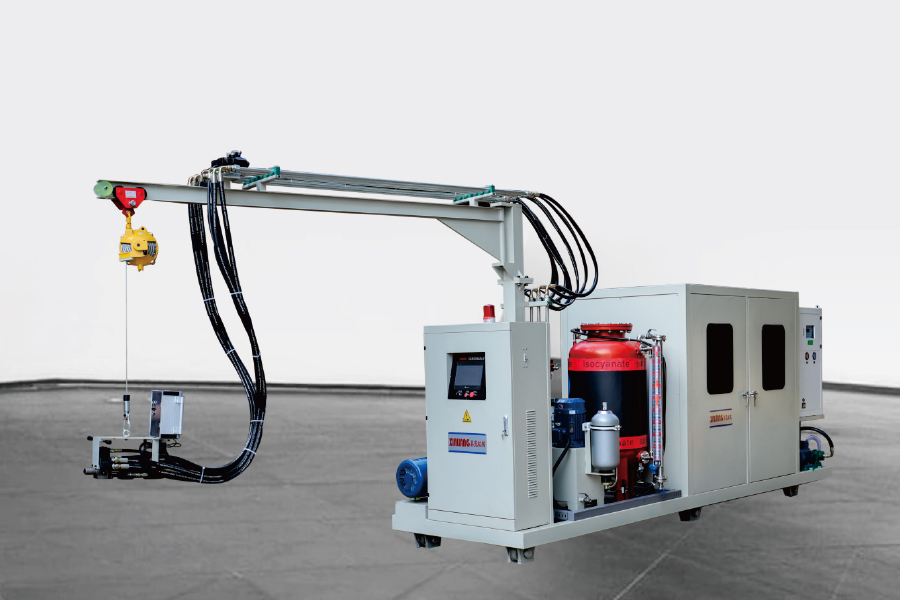
التكوين هو نفس آلة الرغوة ذات الضغط العالي السيكلوبنتان. الفرق الوحيد هو أنه بالنسبة لبعض مصانع العم...
انظر التفاصيل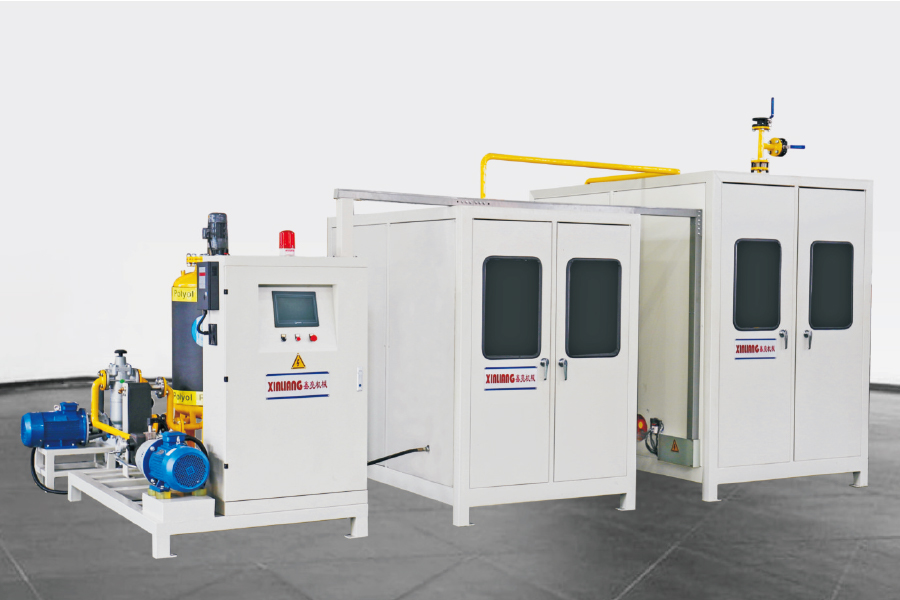
مبدأ العمل لنظام Cyclopentane Premixing قياس وخلط مختلف المواد الخام البولي يوريثان ، مثل الإيزوسيان...
انظر التفاصيل