

 English
 русский
 عربى
عربىتلتزم شركة شينليانغ للآلات دائمًا بفلسفة العمل "الإنسان أولاً، العميل أولاً، الإدارة النزيهة، والتعاون المربح للجميع".
من خلال التحكم في محرك المؤازرة ، باستخدام معالج ثلاثي المحاور ، وبرمجة البرنامج ، والاندماج مع معدا...
انظر التفاصيلمحتوى
When manufacturers evaluate polyurethane foam production methods, the central question is not whether to foam, but how to do it with maximum repeatability and minimum waste. High pressure injection technology answers this by mixing polyol and isocyanate components at pressures typically between 100 and 250 bar, achieving molecular-level homogeneity before the mixture enters the mold. The result is a foam with predictable density, superior mechanical properties, and consistent surface quality — batch after batch.
This article examines every practical benefit of the Polyurethane High Pressure Foaming Injection Machine, supported by performance data and application-specific examples across insulation, automotive, and packaging sectors.
The defining technical advantage of a Polyurethane High Pressure Foaming Injection Machine lies in its mixing principle. Unlike mechanical mixers used in low-pressure systems, high-pressure machines use impingement mixing — two streams of component are forced against each other at high velocity inside a small mixing chamber. This produces:
In rigid panel insulation production, inconsistent mixing produces zones of varying density that degrade the thermal resistance value (lambda value) of the finished panel. High-pressure impingement mixing maintains lambda values within ±2% of specification across full production runs — a level of consistency that low-pressure systems struggle to achieve at comparable throughput.
Foam density directly determines product performance: too low and mechanical strength suffers; too high and material is wasted. Polyurethane High Pressure Foaming Injection Machines provide shot-to-shot volume accuracy within ±0.5%, enabling tight density targeting across the full production run.
The chart below compares key production metrics between low-pressure and high-pressure foaming injection systems across three application areas:
Lower deviation values indicate better density consistency. HP = High Pressure system; LP = Low Pressure system. Data from comparative production trials.
Across all three applications, high-pressure systems reduce shot volume deviation by a factor of 5 to 8 compared to low-pressure alternatives. For the Polyurethane Foam Injection Machine for Insulation segment specifically, this translates into fewer rejected panels and a direct reduction in raw material waste per cubic meter of finished product.
The Polyurethane Foam Injection Machine for Insulation is among the most demanding applications for foaming equipment. Refrigerator cabinets, cold room panels, and building insulation boards all require:
High-pressure foaming injection machines meet these requirements through programmable pour paths, multiple injection point control, and real-time flow rate feedback. In refrigerator cabinet production, facilities using high-pressure systems report scrap rates below 1.5%, compared to 4–7% on older low-pressure lines — a measurable improvement that directly reduces per-unit material cost.
| Quality Metric | Low-Pressure System | High-Pressure System |
|---|---|---|
| Density Variation (kg/m³) | ±6–10 | ±2–3 |
| Lambda Value Consistency | ±5–8% | ±1–2% |
| Void Occurrence Rate | 3–6% | <0.8% |
| Panel Scrap Rate | 4–7% | <1.5% |
| Cycle Time per Panel | 4–6 min | 2–3.5 min |
Automotive interior and structural foam components place some of the most exacting demands on foaming equipment. High Pressure Foam Injection Equipment for Automotive must produce parts that meet strict dimensional tolerances while maintaining consistent acoustic damping and crash energy absorption properties.
Typical automotive foam applications served by high-pressure injection equipment include:
For an automotive tier-1 supplier producing instrument panel backing foam, switching to high-pressure injection equipment reduced cycle time from 4.8 minutes to 2.6 minutes per part while improving dimensional repeatability to within ±0.3 mm on critical fit surfaces. This directly reduced assembly-line rejection incidents by 62% over a 12-month production period.
Protective packaging foam — used to ship electronics, medical devices, industrial components, and fragile consumer goods — must be produced at high volume with consistent cushioning performance. The Polyurethane Injection Molding Machine for Packaging addresses this through:
In electronics packaging production, a single high-pressure injection line operating at 45 shots per hour can produce foam inserts for over 350 units per shift, with cushioning performance variation kept within ±4% of the target G-factor — a critical specification for drop-test certification of packaged goods.
Operating pressure is not simply a mixing quality parameter — it also directly influences production throughput. Higher injection pressure enables faster fill of the mold cavity and shorter cream-to-demold cycles. The SVG chart below illustrates the relationship between system operating pressure and output rate for a standard rigid foam production scenario:
Output rate increases consistently with injection pressure. Data represents a 600×1200mm rigid insulation panel. Actual results vary by formulation and mold design.
At 50 bar, a typical system produces around 12 panels per hour. At 230 bar — the operating range of a full Polyurethane High Pressure Foaming Injection Machine — output reaches 43 panels per hour, a productivity gain of over 250% from the same floor footprint and operator count. This makes pressure optimization a direct lever for production capacity management.
Global regulations on blowing agents have eliminated many older chemical options and created demand for equipment capable of safely handling cyclopentane — a hydrocarbon blowing agent with zero ozone depletion potential (ODP) and low global warming potential (GWP). High-pressure foaming injection machines designed for cyclopentane include:
Manufacturers of refrigerators, cold room panels, and building insulation now specify cyclopentane-compatible high-pressure equipment as standard. This configuration allows compliance with current F-gas regulations in Europe and equivalent standards in export markets, without compromising foam thermal performance — insulation panels blown with cyclopentane achieve lambda values of 0.020–0.022 W/(m·K), meeting the most demanding energy efficiency standards.
Modern Polyurethane High Pressure Foaming Injection Machines are designed as integrated production line components, not standalone units. Key automation features include:
In fully automated insulation panel production lines, high-pressure foaming machines integrated with conveyor systems and automatic press stations achieve overall equipment effectiveness (OEE) values of 82–88%, compared to 55–65% on manually operated low-pressure lines. This difference compounds significantly over a 3-shift production schedule.
Ningbo Xinliang Machinery Co., Ltd. is an enterprise combining industry and trade, dedicated to producing polyurethane foaming equipment, polyurethane foaming production lines, and cyclopentane polyurethane foaming complete equipment. It is a professional high-tech enterprise specializing in polyurethane foaming equipment research and development, manufacturing, and technical services.
With more than ten years of professional design experience, the R&D team is familiar with advanced polyurethane foaming equipment technology from both domestic and international sources. As a professional Custom Polyurethane High Pressure Foaming Injection Machine Supplier and OEM Polyurethane High Pressure Foaming Injection Machine Company, Xinliang Machinery relies on Zhejiang's strong industrial foundation and location advantages to take the development path of "scientific and technological innovation, the pursuit of specialization" — focusing on providing customized solutions for users across the polyurethane industry.
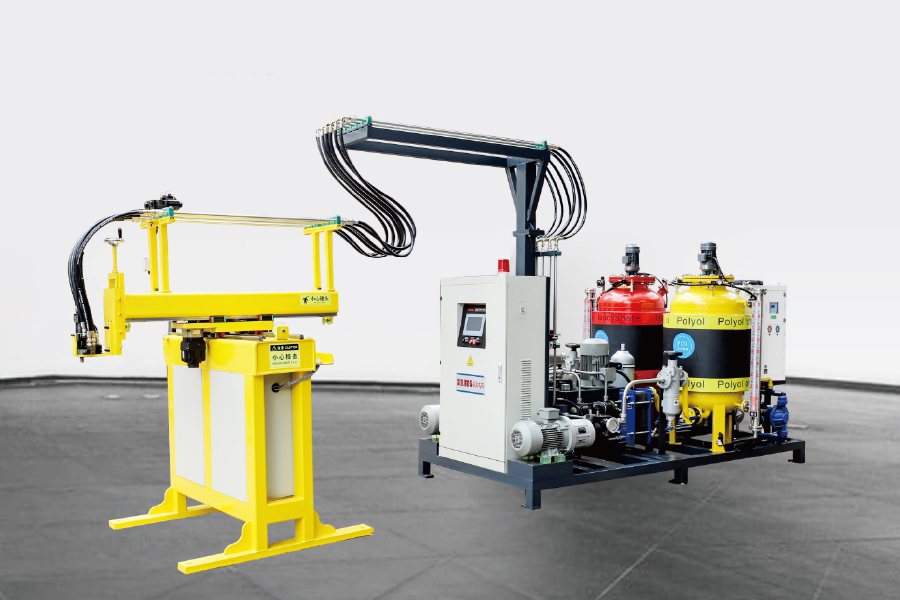
من خلال التحكم في محرك المؤازرة ، باستخدام معالج ثلاثي المحاور ، وبرمجة البرنامج ، والاندماج مع معدا...
انظر التفاصيل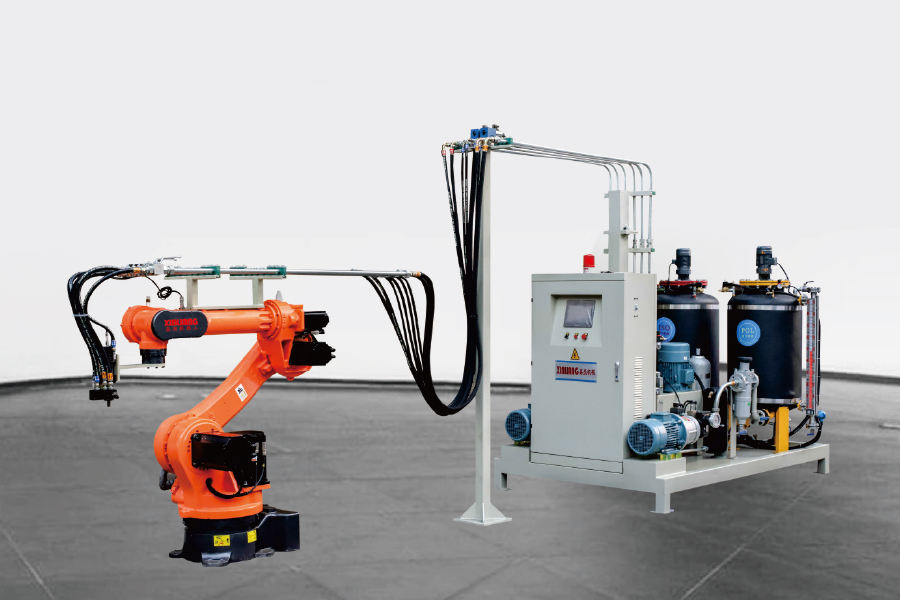
يمكن تخصيص العلامة التجارية الروبوت ، ويتم استخدام المعالج المكون من ستة محاور. إنه مناسب للجمع ب...
انظر التفاصيل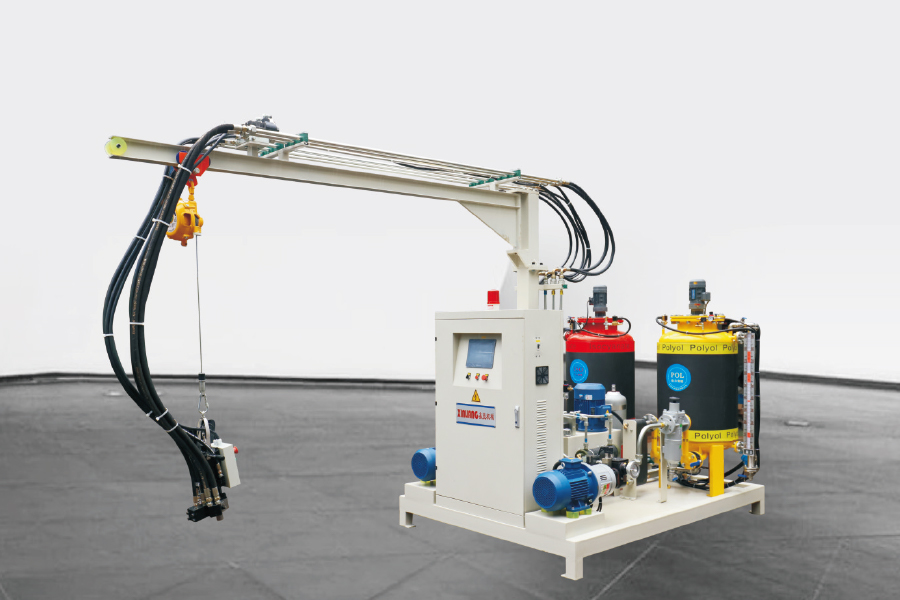
تستخدم آلة حقن البولي يوريثان عالية الضغط عالي الضغط ذراع الروك لحقن الدوران 180 درجة. يمكن تخصيص...
انظر التفاصيل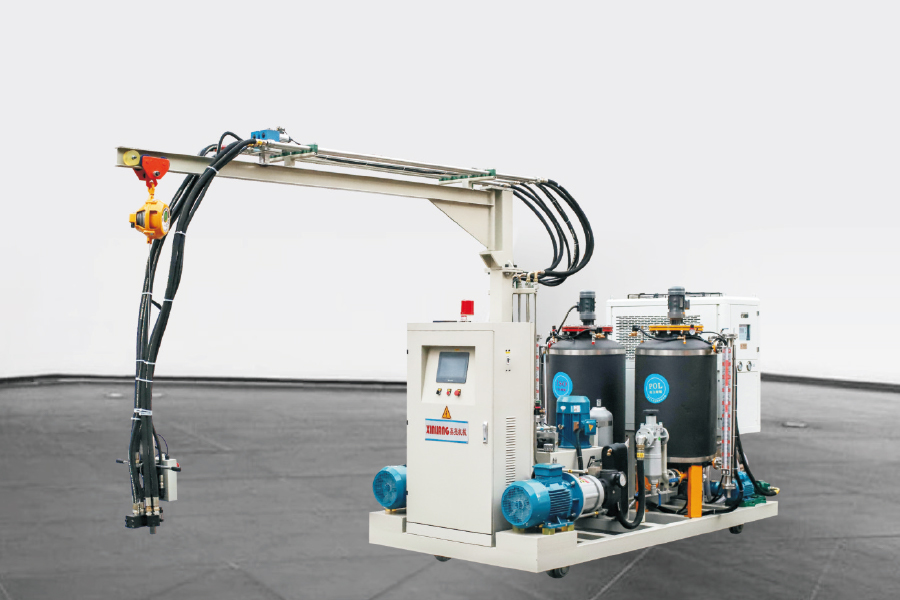
يحتوي آلة حقن الرغوة ذات الضغط العالي المكون من المكونات ذات المكون المكون مع المسار على نفس التك...
انظر التفاصيل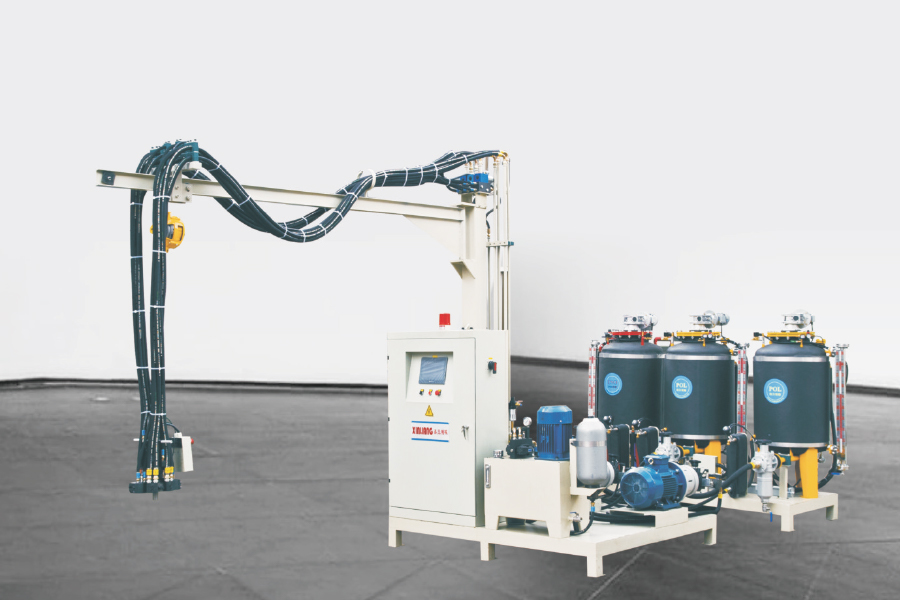
تحتوي آلة حقن الرغوة ذات الضغط العالي المكون من ثلاثة مكونات على خزان ISO 1 و 2 خزانات بولي. يمكن...
انظر التفاصيل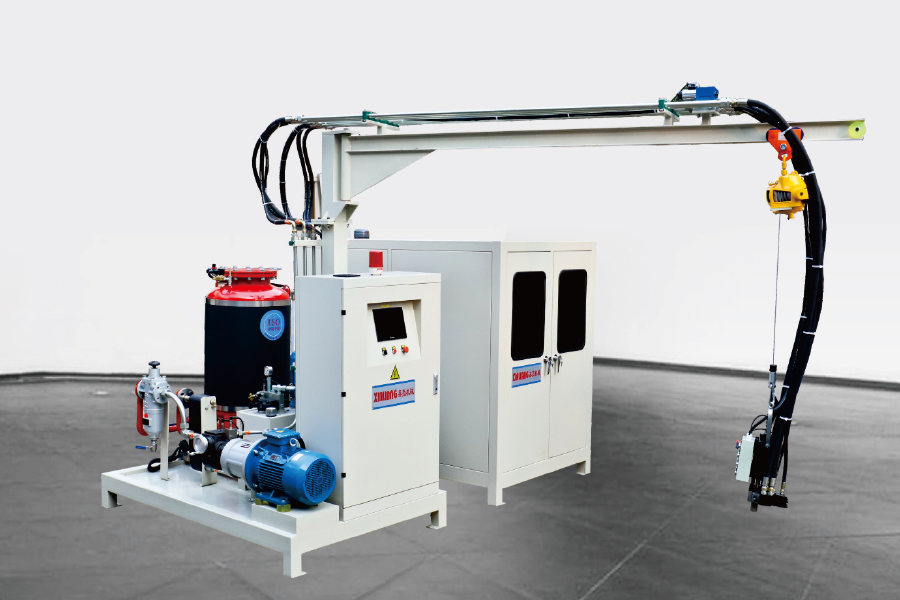
سيكلوبنتان البولي يوريثان ، آلة حقن الرغوة عالية الضغط يعني أن بولي يحتوي على السيكلوبنتان. المواد ا...
انظر التفاصيل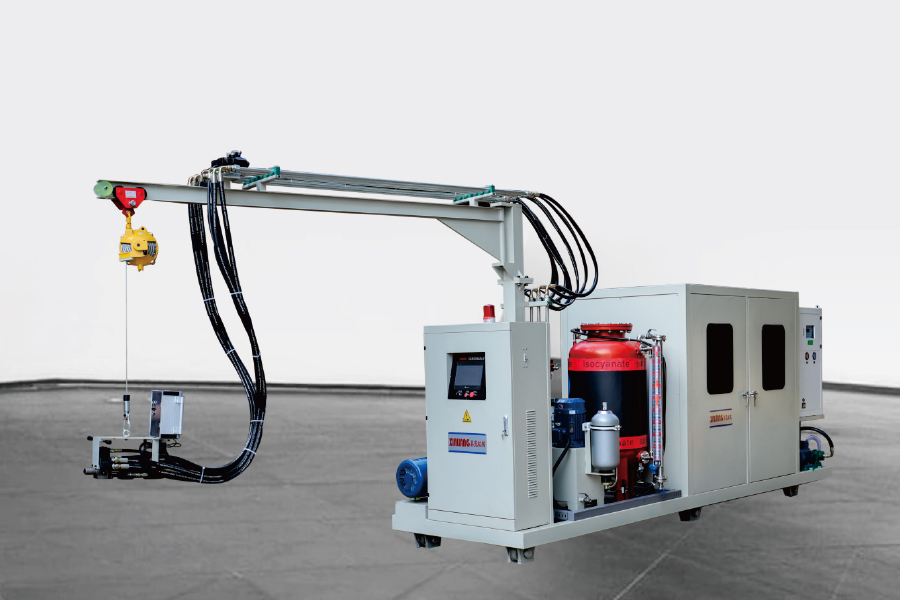
التكوين هو نفس آلة الرغوة ذات الضغط العالي السيكلوبنتان. الفرق الوحيد هو أنه بالنسبة لبعض مصانع العم...
انظر التفاصيل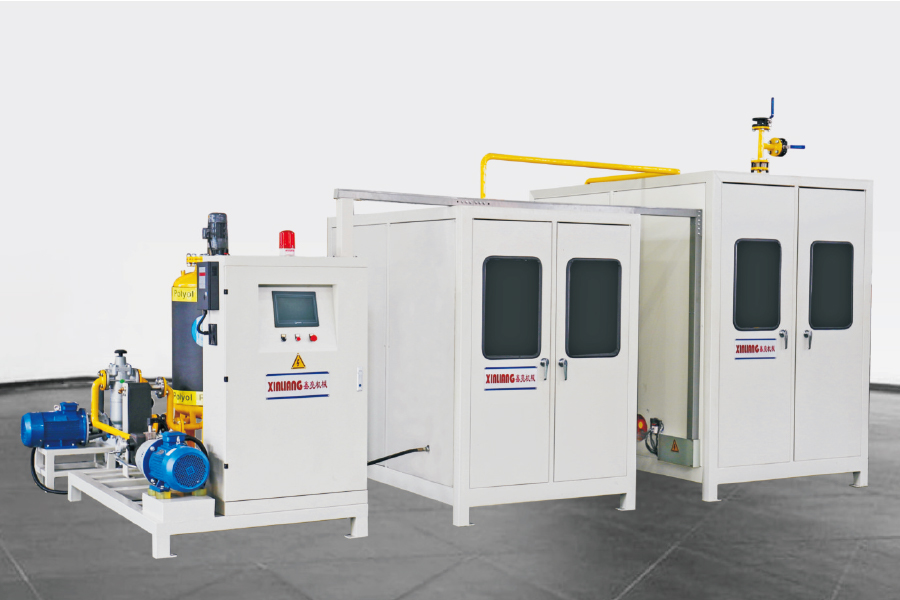
مبدأ العمل لنظام Cyclopentane Premixing قياس وخلط مختلف المواد الخام البولي يوريثان ، مثل الإيزوسيان...
انظر التفاصيل