

 English
 русский
 عربى
عربىتلتزم شركة شينليانغ للآلات دائمًا بفلسفة العمل "الإنسان أولاً، العميل أولاً، الإدارة النزيهة، والتعاون المربح للجميع".
من خلال التحكم في محرك المؤازرة ، باستخدام معالج ثلاثي المحاور ، وبرمجة البرنامج ، والاندماج مع معدا...
انظر التفاصيلDirect Answer: Yes — a polyurethane high pressure foaming injection machine can significantly improve production efficiency in 2026. Compared to low-pressure or manual foaming methods, high-pressure systems achieve mixing ratios accurate to within ±1%, cycle times as short as 3–8 seconds per shot, and continuous output rates exceeding 20 kg/min on large-format machines. When properly integrated into an automated production line, these machines reduce material waste, lower labour dependency, and deliver consistent part quality across high-volume runs — all of which translate directly into measurable gains in throughput and operational efficiency.
This article examines how a polyurethane high pressure foaming injection machine operates, what efficiency improvements are achievable with real data, which industries benefit most, and what to consider when selecting or specifying a custom PU foaming injection machine for a production environment.
محتوى
A polyurethane high pressure foaming injection machine operates by metering, pressurising, and impingement-mixing two reactive chemical components — typically polyol (Component A) and isocyanate (Component B) — at pressures ranging from 100 to 200 bar. At this pressure level, the two streams collide inside a compact mixing head at high velocity, achieving homogeneous mixing without a mechanical agitator. The mixed polyurethane formulation is then injected directly into a mould or dispensed onto a substrate where it expands and cures.
The high-pressure impingement mixing principle is fundamentally different from low-pressure mechanical mixing. Because mixing energy comes from the kinetic collision of the two streams rather than from a rotating mixer, the mixing head remains self-cleaning on each shot cycle — the pressurised recirculation of each component flushes residual material from the mixing chamber between shots, eliminating solvent cleaning and downtime associated with mechanical-mixer low-pressure machines.
The efficiency advantages of a polyurethane high pressure foaming injection machine over low-pressure or manual alternatives are measurable across four key production metrics: cycle time, material waste, part consistency, and labour requirement. The table below compares typical performance figures across the three process categories.
| Performance Metric | Manual / Open Pour | Low-Pressure Machine | High Pressure PU Machine |
|---|---|---|---|
| Cycle Time per Shot | 30 – 90 s | 15 – 40 s | 3 – 12 s |
| Mix Ratio Accuracy | ±5 – 10% | ±2 – 3% | ±0.5 – 1% |
| Material Waste per Shift | 8 – 15% | 4 – 8% | 1 – 3% |
| Part Density Variation | ±10 – 20 kg/m³ | ±5 – 10 kg/m³ | ±1 – 3 kg/m³ |
| Operators Required per Machine | 2 – 4 | 1 – 2 | 0.5 – 1 (with automation) |
| Max Output Rate | 1 – 3 kg/min | 3 – 8 kg/min | 10 – 25 kg/min |
| Cleaning Downtime per Shift | 20 – 40 min | 10 – 20 min | 0 – 2 min |
A practical example illustrates the aggregate efficiency gain: a refrigerator panel insulation line using a high-pressure machine producing one shot every 5 seconds at 0.8 kg per shot delivers 576 kg of foam per hour in continuous operation — a volume that would require eight to ten manual operators to approximate, with inferior density consistency.
The most significant operational efficiency feature of a polyurethane high pressure foaming injection machine is the self-cleaning mixing head. After each shot, the hydraulic cleaning piston traverses the mixing chamber, mechanically ejecting residual mixed material before the next recirculation cycle purges the head with fresh component streams. This process takes less than 0.5 seconds and requires no solvent, no manual intervention, and no production stoppage. In a low-pressure mechanical mixer, head cleaning between formulation changes or at shift end requires solvent flushing, disassembly, and reassembly — consuming 10–30 minutes per cleaning event.
Servo-driven or hydraulic piston metering pumps in high-pressure systems control component flow rates with a precision of ±0.5–1% of set ratio. This accuracy directly reduces overuse of the more costly isocyanate component. In a production run consuming 500 kg of material per shift, a 3% reduction in material waste (compared to low-pressure methods) saves 15 kg of chemical per shift — a meaningful reduction in raw material consumption across high-volume production.
Impingement mixing at pressures above 100 bar produces homogeneous micro-mixing within the mixing chamber in less than 1 millisecond of contact time. This mixing quality is independent of operator skill, component viscosity variation, or temperature fluctuations — unlike mechanical mixing where mixing intensity varies with mixer speed, wear, and formulation. Consistent mixing translates directly to consistent foam cell structure, density, and mechanical properties, reducing part rejection rates from the 5–12% typical of manual or low-pressure processes to 0.5–2% in well-controlled high-pressure systems.
High-pressure machines are designed for integration with carousel mould systems, conveyor-based mould lines, robotic mould loaders, and automated demoulding equipment. The short shot time (3–12 seconds) and deterministic cycle timing of a high-pressure machine make it compatible with synchronised multi-station production cells where a single machine services multiple moulds in rotation. This architecture allows one machine to fill 8–16 moulds per minute in carousel configurations, maximising capital utilisation of both the foaming machine and the mould tooling.
Automotive seat cushions, headrests, armrests, and instrument panel components are produced using polyurethane foaming machines for molding in high-volume injection moulding cells. A typical seat cushion production line operates at 180–240 shots per hour per machine, with tight density tolerances of ±2 kg/m³ required for consistent seat feel and durability compliance. High-pressure machines are the industry standard for this application because the mix ratio consistency and cycle speed required cannot be achieved by low-pressure alternatives at automotive production volumes.
Rigid polyurethane foam is the primary insulating material in refrigerators, freezers, cold room panels, and refrigerated transport containers. The polyurethane high pressure foaming injection machine injects pre-measured foam charges into the cavity between the inner liner and outer shell, where the foam expands and bonds to both surfaces. Precise shot weight control — typically within ±2 g per shot at 800 g average shot weight — ensures consistent insulation thickness and thermal performance across every unit. High-pressure systems achieve the void-free cavity filling required by energy efficiency regulations applied to refrigeration products in Europe, North America, and China in 2026.
Continuous and discontinuous sandwich panel lines for building insulation use high-pressure foaming machines to deposit rigid foam between metal or fibre-reinforced facing sheets. Production speeds on continuous lines reach 6–12 m/min of finished panel, requiring foaming machines capable of sustained output rates of 15–25 kg/min with no interruption. The thermal conductivity of the resulting foam — typically 0.022–0.024 W/m·K — is directly dependent on cell structure uniformity, which is only achievable with impingement mixing at high pressure.
Polyurethane sole systems (single or multi-density) for athletic, safety, and casual footwear are produced on rotary carousel machines with 20–48 stations, using a polyurethane foaming machine for molding configured for rapid multi-component dispensing. A single carousel line can produce 800–1,200 pairs of soles per shift, with the high-pressure machine completing one injection per station as the carousel indexes. The low viscosity and fast reactivity of PU sole systems require the precise timing and mixing control that only high-pressure systems provide at this production rate.
Air filter housings, gaskets, vibration dampers, and technical elastomer parts produced from flexible or semi-rigid PU require precise void-free filling of complex mould geometries. High-pressure injection with carefully controlled back-pressure and injection speed ensures the foam front fills thin sections and undercuts without air entrapment. Shot weights in this segment are often small (50–300 g), and a custom PU foaming injection machine with a low-pressure-range metering configuration is frequently specified to achieve the required shot weight accuracy at the lower end of the machine's flow rate range.
Specifying the correct polyurethane high pressure foaming injection machine for a production application requires evaluation of the following parameters in sequence.
Calculate the required output rate in kg/min based on the planned cycle time and average shot weight. Machine output capacity should be sized at 20–30% above the calculated peak demand to maintain stable recirculation pressure during continuous high-speed production. For small shot weights (under 100 g), confirm the machine's minimum shot weight specification — not all high-pressure machines maintain mix ratio accuracy at very low flow rates without a low-flow mixing head option.
Standard high-pressure machines process two components (polyol and isocyanate) at a fixed or adjustable ratio, typically in the range of 1:1 to 4:1 by weight. Applications requiring a third component (pigment, chain extender, fire retardant, or blowing agent) need a three- or four-component machine with an additional metering circuit. Confirm the required mix ratio range and whether the ratio must be adjustable during production (e.g., for multi-density sole systems) or can be fixed at commissioning.
Polyol components typically require processing temperatures of 20–35 °C; isocyanate is sensitive to temperature above 40 °C (crystallisation risk). Confirm the precision of the machine's temperature control system — a specification of ±0.5 °C is standard for quality-sensitive applications. For materials with narrow processing windows (specialty formulations, low-index systems), tighter control or additional heat exchangers at the mixing head may be required.
Mixing head selection depends on the mould type and production geometry. L-shaped heads suit open mould filling; straight or angled high-pressure heads suit closed-mould injection through a sprue. For robotic dispensing or traversing gantry dispensing, the mixing head must be compatible with the robot mounting interface and have a short purge cycle to maintain quality at start-up. Confirm whether the machine supplier offers a custom PU foaming injection machine configuration with the specific mixing head and robot interface required for your production cell.
Modern high-pressure foaming machines operate under PLC control with HMI touchscreens, programmable shot recipes, real-time pressure and flow monitoring, and production data logging. For quality management systems (ISO 9001, IATF 16949), the ability to log shot weight, mix ratio, component temperature, and injection pressure per shot is a regulatory requirement. Confirm that the machine's control system exports data in a format compatible with the facility's MES or ERP system.
| Selection Parameter | Typical Range / Specification | Key Consideration |
|---|---|---|
| Output Rate | 0.5 – 25 kg/min | Size at 120–130% of peak demand |
| Injection Pressure | 100 – 200 bar | Higher pressure improves mixing for low-viscosity systems |
| Mix Ratio Range | 1:1 to 4:1 (weight) | Multi-density or pigmented systems need adjustable ratio |
| Temperature Control Accuracy | ±0.5 °C | Critical for consistent reactivity and foam density |
| Shot Weight Accuracy | ±1 – 2 g per shot | Verify at minimum and maximum shot weight settings |
| Component Tanks | 50 – 1,000 L | Size for minimum 4 hours of uninterrupted production |
| Number of Components | 2 – 4 | 3- or 4-component for pigmented or specialty formulations |
Standard high-pressure machines cover the majority of common production requirements. However, a custom PU foaming injection machine becomes necessary when the application has requirements outside the standard product range. The following scenarios typically require a custom specification:
When requesting a custom PU foaming injection machine, provide the formulation system (polyol type, isocyanate index, blowing agent, additives), target shot weight and cycle time, mould type and clamping force, required mix ratio, and integration requirements (robot interface, MES connectivity, safety zone requirements). This information allows the machine builder to correctly specify all subsystems before engineering begins.
Sustained production efficiency from a polyurethane high pressure foaming injection machine depends on consistent preventive maintenance. The high-pressure hydraulic system, precision metering pumps, and mixing head are the three subsystems that require the most attention.
A well-maintained high-pressure foaming machine operating in a two-shift production environment has a typical service life of 15–20 years before major overhaul of the hydraulic power unit and metering pumps is required. The mixing head assembly, being a wear item, is typically rebuilt or replaced every 3–7 years depending on production volume and formulation aggressiveness.
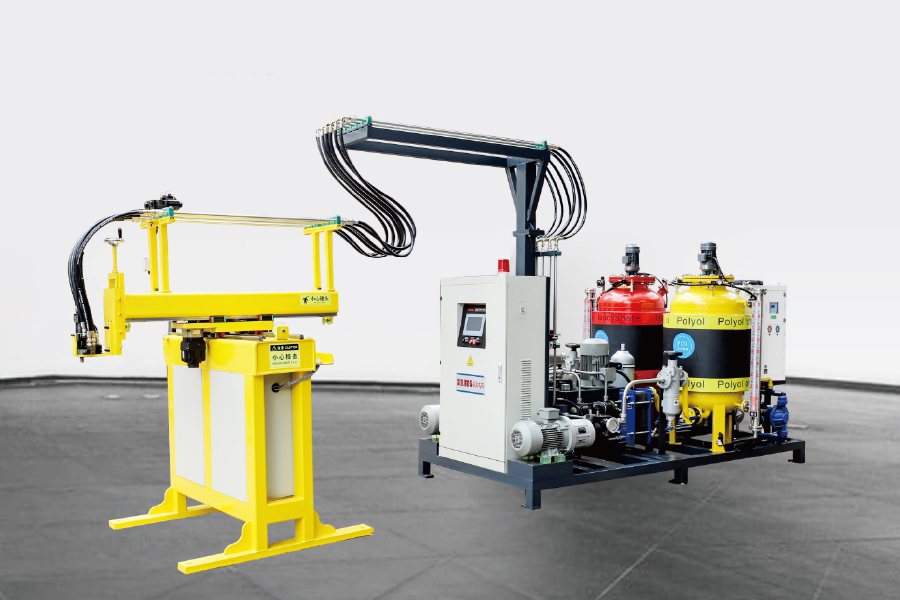
من خلال التحكم في محرك المؤازرة ، باستخدام معالج ثلاثي المحاور ، وبرمجة البرنامج ، والاندماج مع معدا...
انظر التفاصيل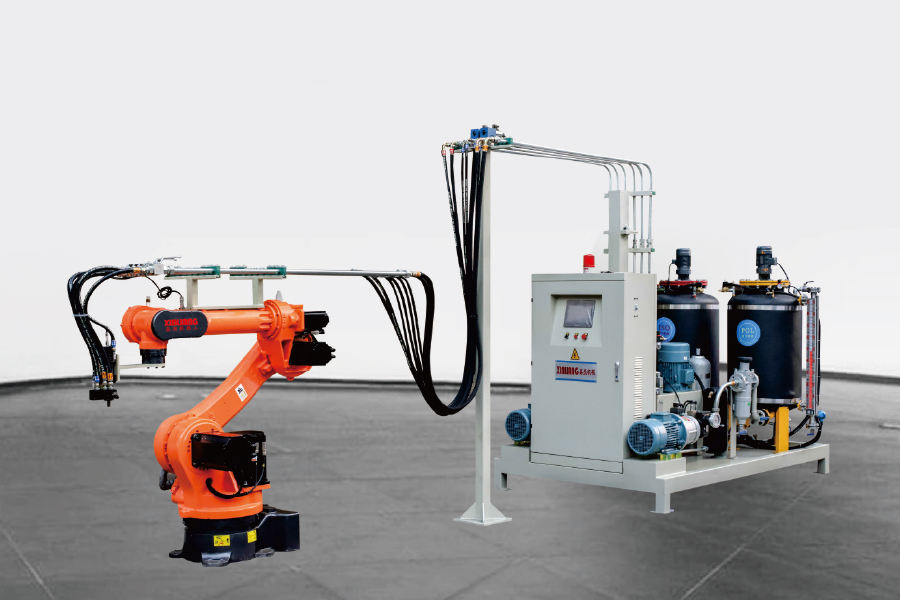
يمكن تخصيص العلامة التجارية الروبوت ، ويتم استخدام المعالج المكون من ستة محاور. إنه مناسب للجمع ب...
انظر التفاصيل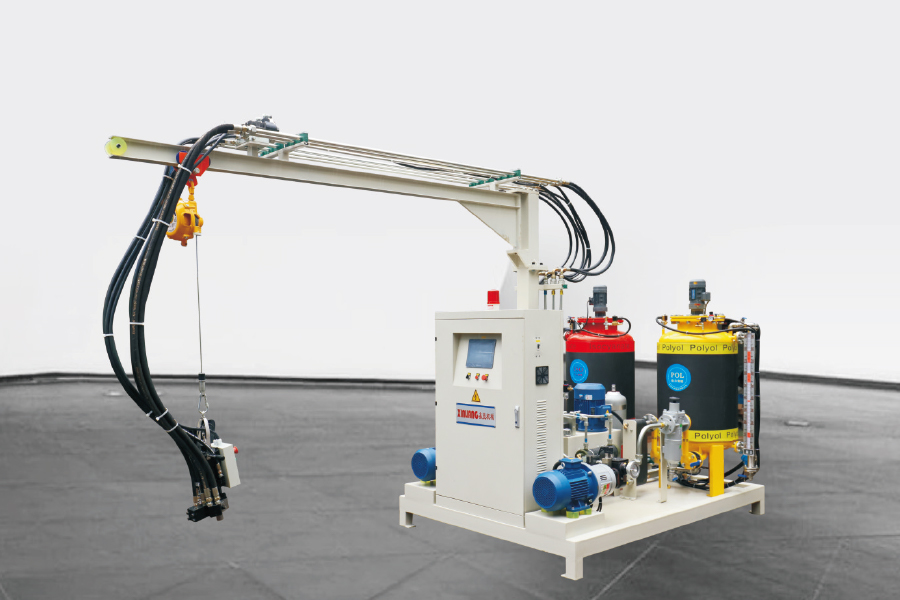
تستخدم آلة حقن البولي يوريثان عالية الضغط عالي الضغط ذراع الروك لحقن الدوران 180 درجة. يمكن تخصيص...
انظر التفاصيل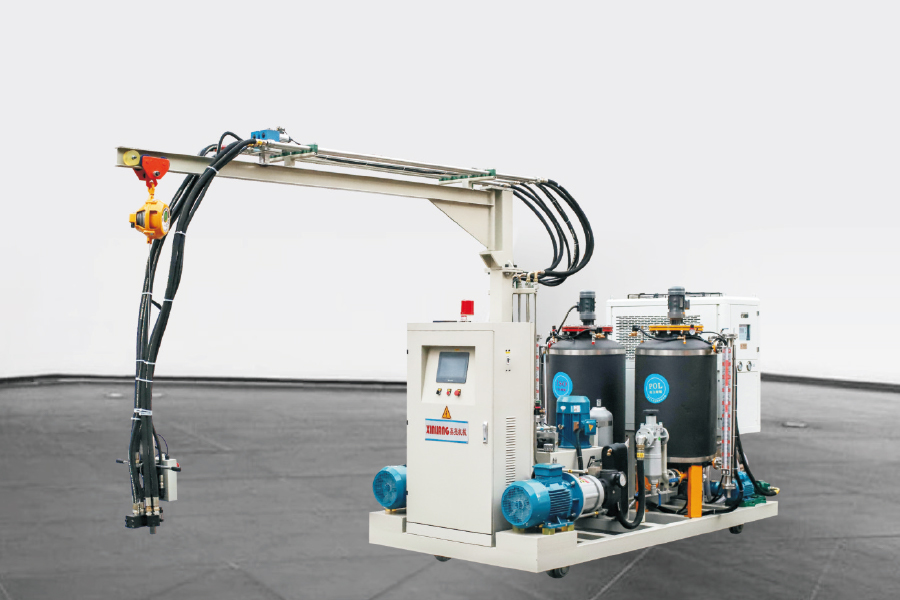
يحتوي آلة حقن الرغوة ذات الضغط العالي المكون من المكونات ذات المكون المكون مع المسار على نفس التك...
انظر التفاصيل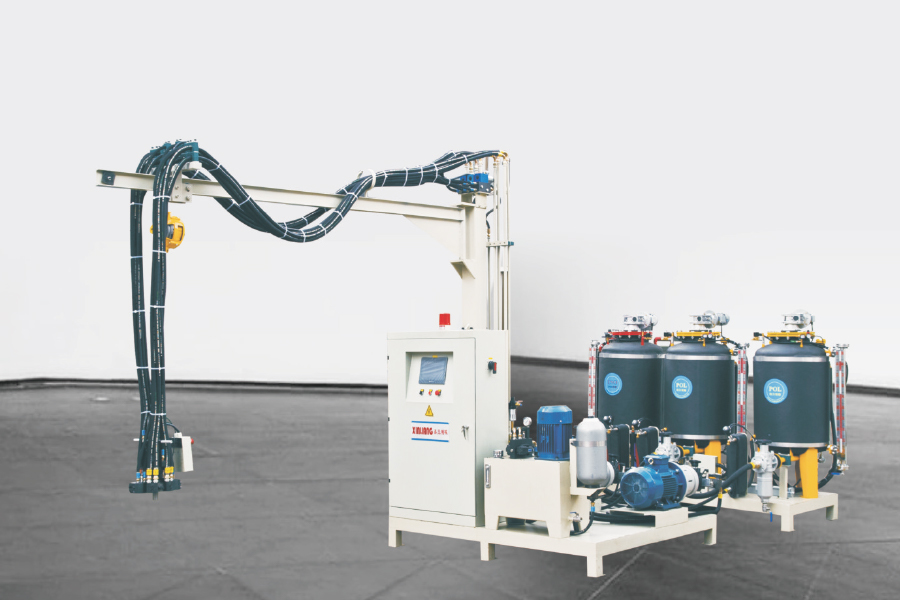
تحتوي آلة حقن الرغوة ذات الضغط العالي المكون من ثلاثة مكونات على خزان ISO 1 و 2 خزانات بولي. يمكن...
انظر التفاصيل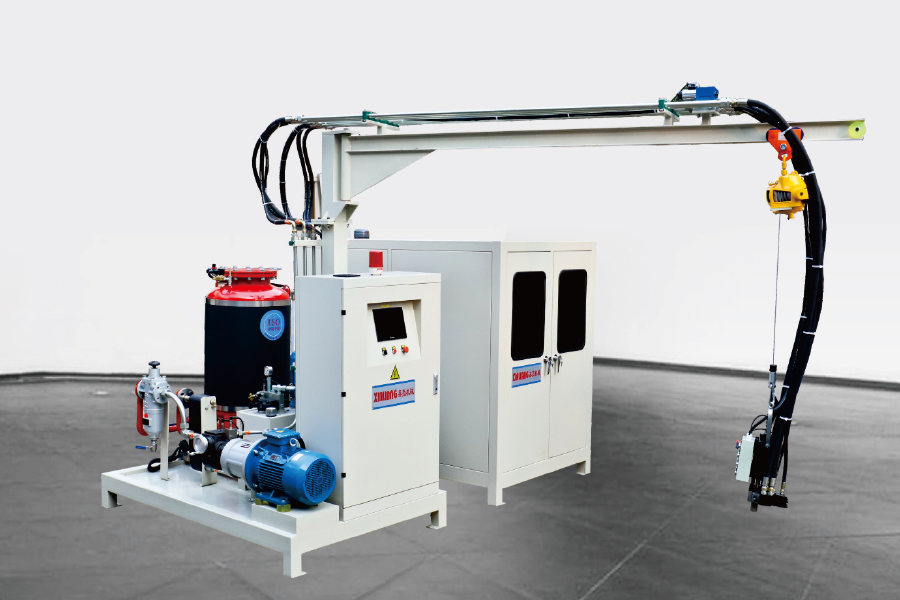
سيكلوبنتان البولي يوريثان ، آلة حقن الرغوة عالية الضغط يعني أن بولي يحتوي على السيكلوبنتان. المواد ا...
انظر التفاصيل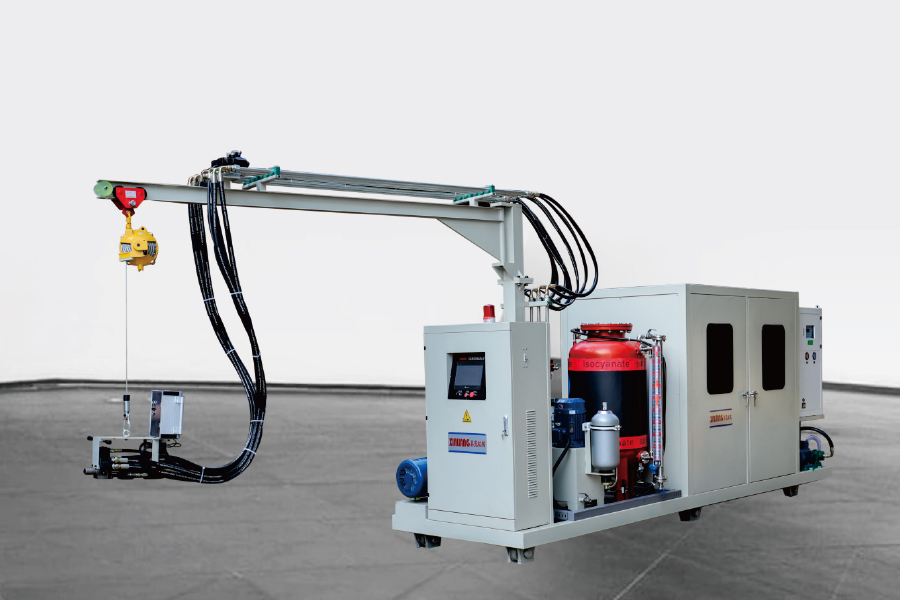
التكوين هو نفس آلة الرغوة ذات الضغط العالي السيكلوبنتان. الفرق الوحيد هو أنه بالنسبة لبعض مصانع العم...
انظر التفاصيل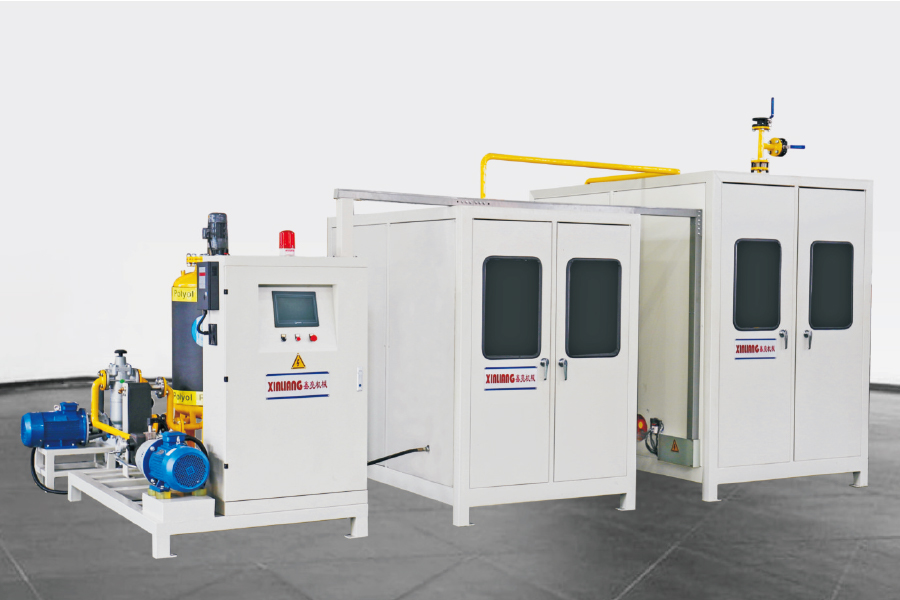
مبدأ العمل لنظام Cyclopentane Premixing قياس وخلط مختلف المواد الخام البولي يوريثان ، مثل الإيزوسيان...
انظر التفاصيل