

 English
 русский
 عربى
عربىتلتزم شركة شينليانغ للآلات دائمًا بفلسفة العمل "الإنسان أولاً، العميل أولاً، الإدارة النزيهة، والتعاون المربح للجميع".
من خلال التحكم في محرك المؤازرة ، باستخدام معالج ثلاثي المحاور ، وبرمجة البرنامج ، والاندماج مع معدا...
انظر التفاصيلمحتوى
Cleaning of the Shell and Key Parts: After work each day, use a soft damp cloth to remove dust, oil stains and residual polyurethane materials on the surface of the equipment, focusing on cleaning easily contaminated areas such as the filling gun and pipe connections to prevent corrosion of the equipment after the material solidifies.
Inspection of Moving Parts: Check whether there are foreign objects stuck in moving parts such as screws and guide rails to ensure that there is no accumulation of material or hardened resin affecting operation.
Lubrication Cycle and Material Selection:
Gears and bearings: Add high-temperature resistant grease (such as lubricants containing molybdenum disulfide) every month to reduce friction loss.
Hydraulic System: Replace anti-wear hydraulic oil every quarter and clean the oil tank filter to prevent oil contamination from causing pump valves to get stuck.
Lubrication Notes: During the running-in period (the first 6 months) of new equipment, the lubrication cycle needs to be shortened to once every half a month.
Seal inspection: Check the seals of the barrel, nozzle and pipeline every week. If aging or cracks are found (common in high-temperature areas), replace the corrosion-resistant fluororubber seals immediately.
Emergency treatment of leakage: When polyurethane raw material leakage is found, stop the machine immediately and clean it with a special cleaning agent (such as DOP) to avoid material solidification and blocking the pipeline.
Pressure detection: Use a pressure gauge to detect the pump output pressure every month. Abnormal fluctuations may indicate pump body wear or valve group failure (normal range 20-110MPa).
Oil management: Replace the hydraulic oil once a year and clean the oil tank at the same time; synthetic fire-resistant hydraulic oil is recommended in high-temperature environments.
Sensor calibration:
Temperature sensor: Calibrate the barrel and nozzle temperature every quarter (allowable deviation ±2℃) to prevent material degradation due to inaccurate temperature measurement.
Pressure sensor: Compare the actual pressure with the set value through PLC. If the deviation exceeds 5%, recalibration is required.
Line inspection: Regularly check whether the cable insulation layer is aging, especially the lines near high temperature areas.
Anti-corrosion treatment: The barrel is lined with copper-aluminum alloy, and the screw is chrome-plated to resist wear and corrosion of polyurethane materials.
Cleaning procedure: Before long-term shutdown, a cleaning agent (such as DOP) must be used to completely replace residual materials to prevent solidification and blockage.
|
Fault phenomenon |
Possible causes |
Solutions |
|
Pressure drop |
Hydraulic oil contamination/pump seal failure |
Replace oil or seals, clean oil tank |
|
Large pressure fluctuations |
Accumulator failure or PID parameters not optimized |
Check accumulator nitrogen pressure and adjust control algorithm |
Source of the problem:
The nozzle temperature is too low, resulting in poor material atomization (it is recommended to maintain 177-232℃).
The flow of A/B components is not synchronized (the deviation needs to be <3%).
Solution: Calibrate the metering pump and check whether the check valve is backflowing.
Mechanical noise: Check whether the screw bearing or gearbox is short of oil and add grease.
Hydraulic noise: Check whether the oil pump intake or filter element is blocked, exhaust or replace the filter element.
Winter antifreeze measures
Pipeline insulation: Install electric heating cables and drain cooling water after shutdown.
Material selection: Use low-viscosity polyurethane raw materials in low-temperature environments to avoid insufficient fluidity.
Corrosive environment protection
Surface treatment: In humid or chemical areas, the equipment shell is coated with polyurethane anti-corrosion coating.
Material upgrade: Key components are made of 316 stainless steel or high chromium alloy.
Two-Component Mobile Polyurethane High Pressure Injection Machine With Tracks usually include the following core components:
Crawler chassis: provides mobility and stability, adapting to complex terrain (such as tunnels, mines).
High-pressure pump system: two-component metering pump (gear pump or plunger pump) to ensure accurate mixing of A/B components (error <3%).
Mixing and injection head: high-pressure mixing head achieves uniform mixing of materials, and some models are equipped with automatic gun cleaning mechanism.
Control system: PLC or touch screen control, supporting real-time adjustment of flow and pressure.
Strong passability: ground pressure ≤35kPa, climbing ability ≥25°, suitable for complex environments such as muddy and slopes.
High stability: Compared with wheeled equipment, the crawler chassis vibrates less during high-pressure injection, reducing material waste.
Protective measures: Corrosive agents (such as isocyanates) require gas masks and corrosion-resistant gloves.
Explosion-proof requirements: In dusty environments (such as coal mines), the AQ 4232-2025 explosion-proof standard must be met.
Low emission design: Some models are equipped with exhaust gas recovery devices to reduce VOCs release.
Environmental protection of materials: Solvent-free polyurethane is preferred to avoid groundwater pollution.
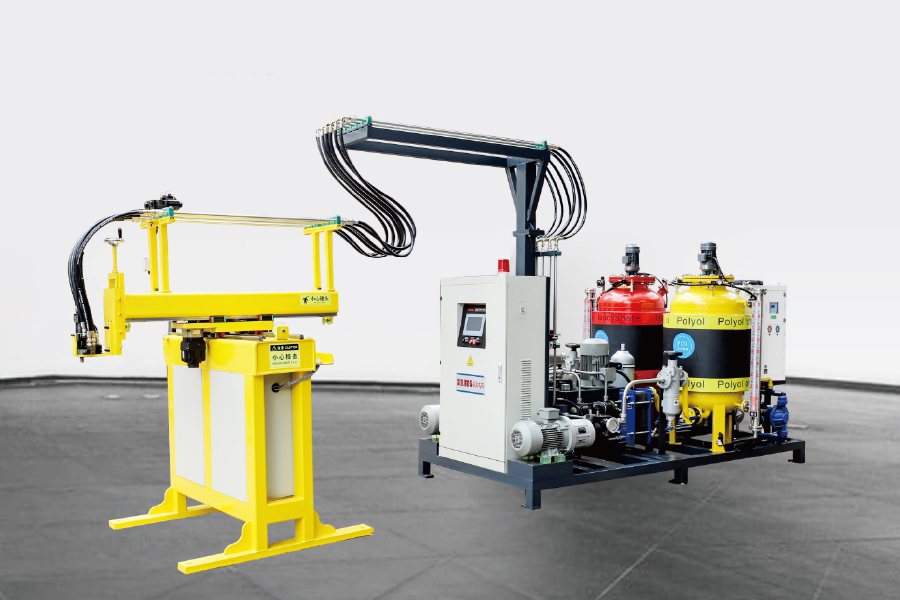
من خلال التحكم في محرك المؤازرة ، باستخدام معالج ثلاثي المحاور ، وبرمجة البرنامج ، والاندماج مع معدا...
انظر التفاصيل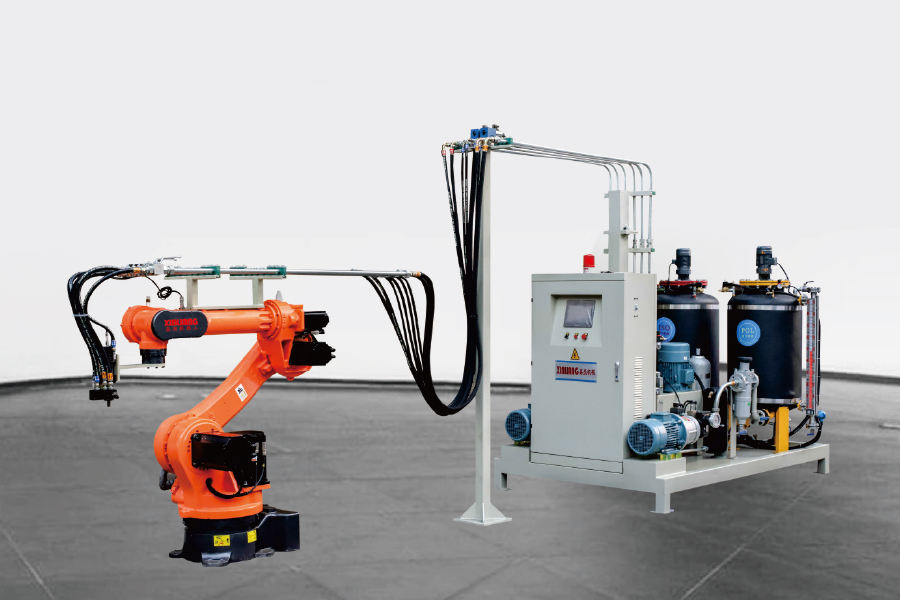
يمكن تخصيص العلامة التجارية الروبوت ، ويتم استخدام المعالج المكون من ستة محاور. إنه مناسب للجمع ب...
انظر التفاصيل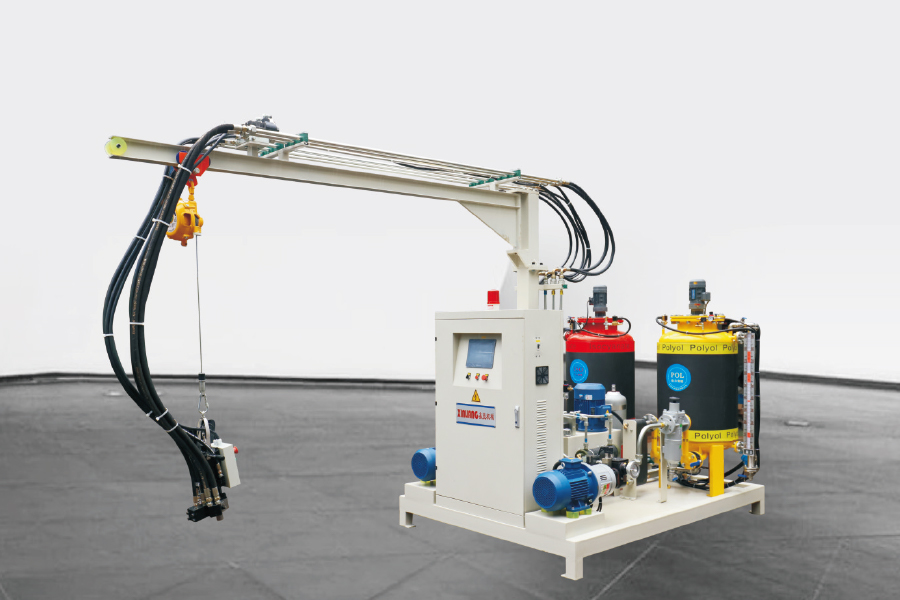
تستخدم آلة حقن البولي يوريثان عالية الضغط عالي الضغط ذراع الروك لحقن الدوران 180 درجة. يمكن تخصيص...
انظر التفاصيل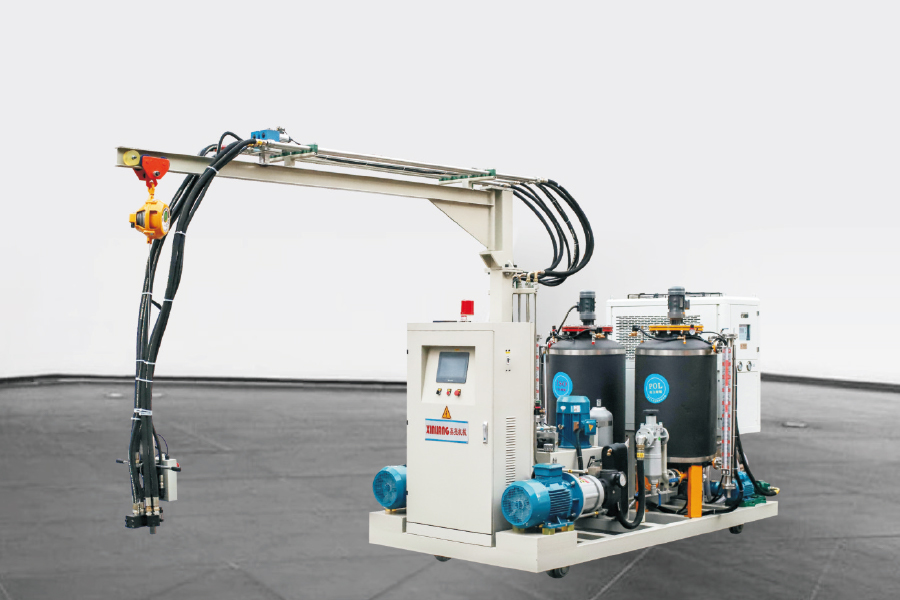
يحتوي آلة حقن الرغوة ذات الضغط العالي المكون من المكونات ذات المكون المكون مع المسار على نفس التك...
انظر التفاصيل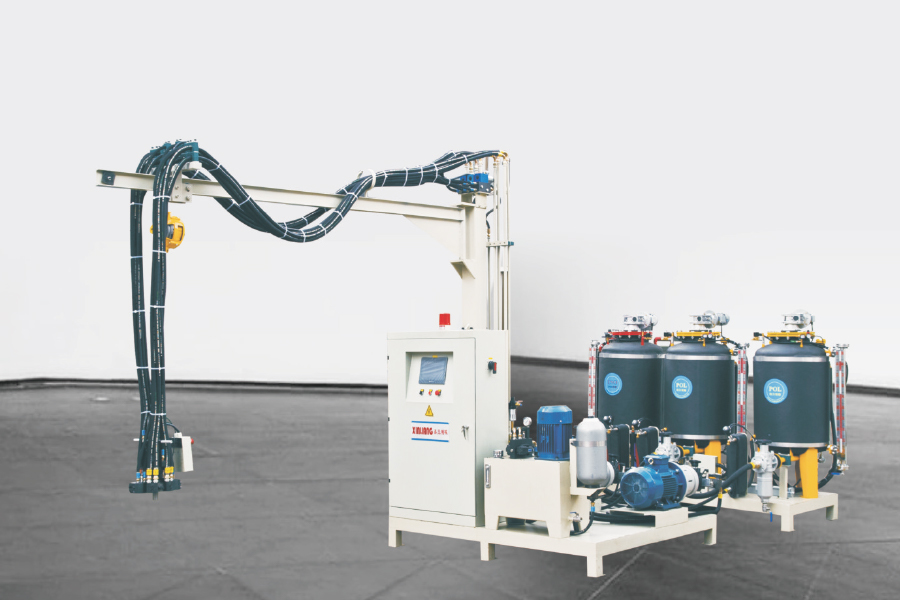
تحتوي آلة حقن الرغوة ذات الضغط العالي المكون من ثلاثة مكونات على خزان ISO 1 و 2 خزانات بولي. يمكن...
انظر التفاصيل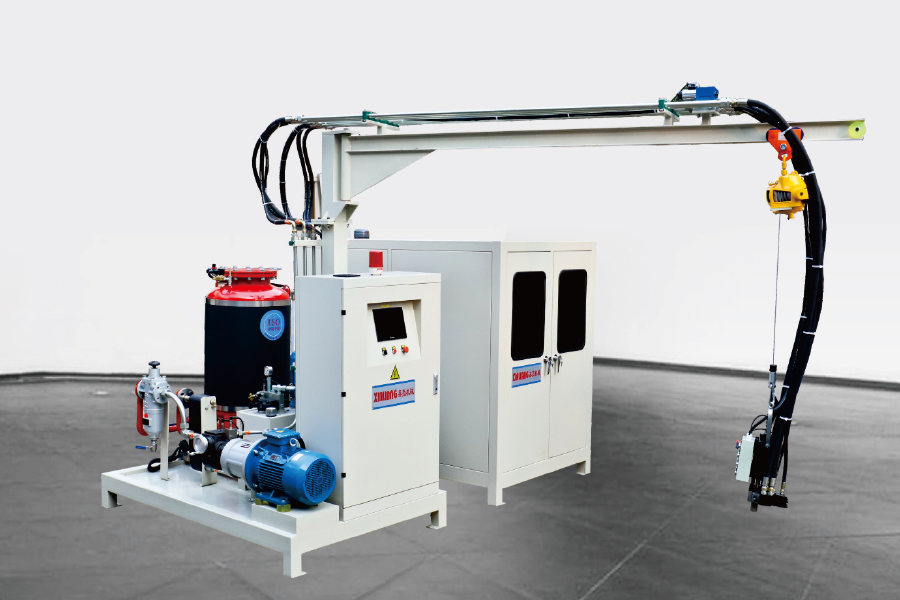
سيكلوبنتان البولي يوريثان ، آلة حقن الرغوة عالية الضغط يعني أن بولي يحتوي على السيكلوبنتان. المواد ا...
انظر التفاصيل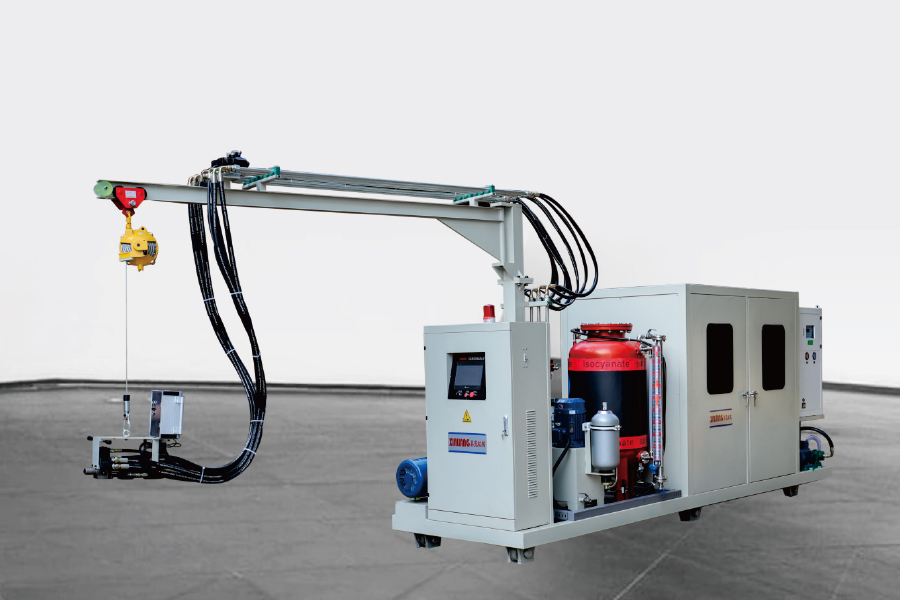
التكوين هو نفس آلة الرغوة ذات الضغط العالي السيكلوبنتان. الفرق الوحيد هو أنه بالنسبة لبعض مصانع العم...
انظر التفاصيل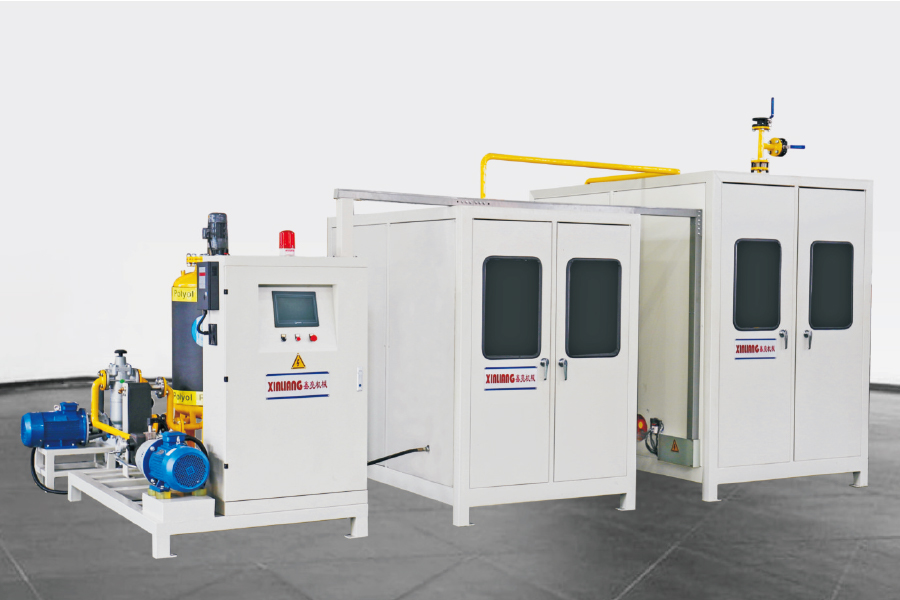
مبدأ العمل لنظام Cyclopentane Premixing قياس وخلط مختلف المواد الخام البولي يوريثان ، مثل الإيزوسيان...
انظر التفاصيل