

 English
 русский
 عربى
عربىتلتزم شركة شينليانغ للآلات دائمًا بفلسفة العمل "الإنسان أولاً، العميل أولاً، الإدارة النزيهة، والتعاون المربح للجميع".
من خلال التحكم في محرك المؤازرة ، باستخدام معالج ثلاثي المحاور ، وبرمجة البرنامج ، والاندماج مع معدا...
انظر التفاصيلمحتوى
The single most effective maintenance strategy for a polyurethane high pressure foaming injection machine is a structured, time-based maintenance schedule executed without exception. Industry data from polyurethane equipment manufacturers indicates that over 70% of unplanned machine downtime is directly traceable to deferred or skipped maintenance—particularly neglected mixing head cleaning, degraded seals, and contaminated chemical components. A machine that receives consistent preventive care can operate reliably for 15 to 20 years; one that does not may require major component replacement within 3 to 5 years.
This guide covers every critical maintenance area for high pressure polyurethane foaming injection machines—from daily operational checks to annual overhaul procedures—with specific intervals, tolerance values, and actionable steps that production teams and maintenance engineers can implement immediately.
A polyurethane high pressure foaming injection machine is a precision chemical processing system. Before addressing maintenance, it is essential to understand which subsystems carry the highest failure risk and why:
Daily checks take 15 to 30 minutes but prevent the majority of mid-shift failures. Every operator should complete the following before starting production and after shutting down:
The mixing head is the component most directly responsible for foam quality and is the most failure-prone part of any polyurethane high pressure foaming injection machine. Mixing head maintenance must be treated as a non-negotiable daily task, not a weekly or monthly one.
The self-cleaning piston wipes the mixing chamber bore on every cycle. Over time, this action causes measurable wear on both the piston OD and the bore ID. When the piston-to-bore clearance exceeds 0.02 to 0.03 mm, material begins to leak past the piston during injection, causing contamination of the hydraulic circuit and degraded foam quality. Measure piston-to-bore clearance every 500,000 shots or annually—whichever comes first—and replace components when tolerance is exceeded.
The impingement nozzles that direct high-velocity chemical streams into the mixing chamber are precision-drilled components. Nozzle wear or partial blockage causes asymmetric impingement, which results in poorly mixed material and foam with density variations, voids, or surface defects. Inspect nozzle orifices weekly using a calibrated pin gauge. Replace nozzles when the orifice diameter has increased by more than 5% from nominal.
If cured PU material is found in the mixing head—due to a missed purge or system fault—never use metal tools to chip or scrape the bore, as this will score the precision surface and accelerate future wear. Use only approved PU stripping solvent (such as DMF-based or MEK-based strippers), apply with a soft cloth or nylon brush, and allow adequate soak time before gentle removal. Mechanical damage to the mixing head bore is the most preventable and most expensive repair in PU machine maintenance.
Isocyanate is hygroscopic—it reacts with atmospheric moisture to form solid urea and carbamic acid deposits that block filters, nozzles, and valves. All isocyanate circuit components must be kept sealed from atmospheric moisture at all times. Practical steps include:
Polyol formulations typically contain catalysts, blowing agents, surfactants, and flame retardants that can separate or settle over time. Maintain continuous recirculation in the polyol tank and agitate stored material if the machine has been idle for more than 8 hours. Replace polyol circuit filters every 500 operating hours and inspect the recirculation pump seals monthly for signs of leakage or degradation.
Metering pump performance directly controls the mix ratio. A ratio deviation of more than ±2% from the specified formulation will noticeably affect foam properties—density, hardness, and cure time. Verify the pump output ratio using graduated cylinders every 2 weeks or after any pump service. Service the pump piston seals and check valves every 2,000 operating hours or when output pressure variance exceeds ±5 bar from target.
The hydraulic system of a high pressure PU foaming machine operates at pressures of 150 to 250 bar, making fluid cleanliness critical. Particulate contamination in hydraulic fluid is rated on the ISO 4406 cleanliness scale—the target for precision PU machine hydraulics is typically ISO 16/14/11 or cleaner. Contamination above this level accelerates wear on servo valves, proportional valves, and cylinder seals at a rate proportional to particle concentration.
| Interval | Component / System | Action Required | Key Acceptance Criteria |
|---|---|---|---|
| Daily | Mixing head | Inspect for PU residue; purge after last shot | Clean bore; no cured material present |
| Daily | Chemical tanks | Check temperature, level, nitrogen blanket pressure | Temp within ±1°C; N₂ pressure positive |
| Daily | All hoses and fittings | Visual inspection for leaks and crystallization | No leaks; no white deposits on isocyanate lines |
| Weekly | Injection nozzles | Measure orifice diameter with pin gauge | Orifice diameter within 5% of nominal |
| Bi-weekly | Metering pumps | Verify output ratio with graduated cylinders | Ratio deviation ≤ ±2% of specification |
| Monthly | Seals and O-rings | Inspect chemical circuit seals for swelling, cracking | No visible degradation; no weeping at seal faces |
| Every 250 hrs | Isocyanate circuit filters | Replace filter element | Pressure drop restored to baseline |
| Every 500 hrs | Hydraulic return filter; polyol filters | Replace filter elements | No bypass indicator activation post-replacement |
| Every 2,000 hrs | Hydraulic fluid; metering pump seals | Full fluid change; pump seal and check valve service | ISO 16/14/11 cleanliness; pressure variance ≤ ±5 bar |
| Annually | Mixing head piston and bore | Measure piston-to-bore clearance; replace if needed | Clearance ≤ 0.02–0.03 mm |
When a polyurethane high pressure foaming injection machine produces defective foam or exhibits abnormal behavior, rapid and accurate diagnosis prevents extended downtime. The following table covers the most frequent fault conditions:
| Symptom | Most Likely Cause | Corrective Action |
|---|---|---|
| Foam has voids or large cells | Blocked nozzle; incorrect mix ratio; temperature too low | Inspect and clean nozzles; verify pump ratio; check tank temperature |
| Foam density outside specification | Mix ratio drift; blowing agent loss; worn metering pump | Recalibrate pump ratio; check polyol formulation; service pump |
| Mixing head difficult to open or close | Cured PU in bore; contaminated hydraulic fluid; worn piston | Soak with PU stripper; sample and change hydraulic fluid; measure piston clearance |
| White deposits in isocyanate lines | Moisture contamination of isocyanate circuit | Flush affected lines; replace filters; check N₂ blanket integrity; investigate moisture source |
| Injection pressure unstable or dropping | Worn pump; clogged filter; hydraulic pressure loss | Replace filters; service pump check valves; inspect hydraulic circuit for leaks |
| Foam cure time significantly longer than normal | Component temperature too low; catalyst degradation; incorrect ratio | Verify and adjust tank temperatures; check polyol age and storage conditions; recalibrate ratio |
Maintenance work on a polyurethane high pressure foaming injection machine involves direct exposure to isocyanates—chemicals classified as sensitizers and potential carcinogens under IARC Group 3 designation. Safe practices are not optional:
For machines running in continuous production, a full mixing head disassembly and service is recommended every 6 to 12 months, or every 500,000 shots—whichever comes first. This service includes measuring piston and bore dimensions, replacing all internal seals and O-rings, inspecting and replacing injection nozzles if worn, and cleaning all internal surfaces. Machines operating in high-abrasive applications (such as rigid foam with mineral fillers) may require mixing head service every 3 to 4 months. Always perform a calibrated output test after reassembly before returning to production.
Static isocyanate in contact with any trace moisture will react and form solid urea deposits. Over a typical 48- to 72-hour weekend shutdown without recirculation, significant crystalline deposits can form in filters, valves, and nozzles, potentially requiring complete circuit disassembly to clear. The correct procedure for weekend shutdowns is to maintain the isocyanate circuit in slow recirculation mode (typically 10–20% of production flow rate) with the nitrogen blanket maintained on the tank. For shutdowns exceeding one week, consult the machine manufacturer's extended shutdown protocol, which typically involves flushing the isocyanate circuit with a compatible solvent.
This is technically possible but carries significant risk. The seals in a polyurethane high pressure foaming machine—particularly in the isocyanate circuit—must be manufactured from materials with proven compatibility with MDI and TDI isocyanates at operating temperatures, typically PTFE, Viton (FKM), or EPDM depending on the specific chemical system. Generic seals may use a similar material designation but with different durometer or additive profiles that cause accelerated chemical attack. For critical sealing points (mixing head piston, pump seals, high-pressure valves), always use OEM-specified seals. Aftermarket seals may be acceptable for lower-pressure secondary circuits where a seal failure is detectable and non-catastrophic, but never for primary chemical sealing at injection pressures.
The most accessible field method is the graduated cylinder volume test: set the machine to recirculation mode, divert each component output into separate graduated cylinders simultaneously for a fixed time period (typically 10 seconds), then compare volumes. The ratio of Component A to Component B volumes should match the formulation specification within ±2%. This test requires no specialized equipment—only two identical graduated cylinders and a stopwatch. For higher accuracy, use calibrated flow meters installed in each circuit, which provide continuous real-time ratio monitoring. Many modern PU machines include integrated flow ratio monitoring as standard; if yours does not, retrofitting flow sensors is a worthwhile investment that typically costs $500 to $2,000 per circuit.
For storage periods exceeding two weeks, the machine requires a formal preservation procedure. The isocyanate circuit must be completely flushed with a dry, isocyanate-compatible solvent (such as dry MEK or manufacturer-approved flushing agent) until clear, then sealed under dry nitrogen. The polyol circuit should be drained and flushed if it contains reactive formulations, or left in circulating mode if the formulation is shelf-stable. The mixing head should be disassembled, cleaned, lightly coated with a compatible oil or grease on metal surfaces, and stored separately. The hydraulic system should be left with fluid in place but the machine powered down. Before restarting after extended storage, perform a full pre-production inspection and flush before introducing active chemicals.
Nozzle wear is primarily driven by the abrasiveness of the chemical formulation and injection velocity. Three practices significantly extend nozzle life: first, ensure the chemical temperature is within specification—low-viscosity material at correct temperature requires lower injection pressure to achieve target impingement velocity, reducing abrasive wear; second, use tungsten carbide or hardened stainless steel nozzles rather than standard stainless in abrasive formulations—these can last 3 to 5 times longer than standard nozzles at a cost premium of 2 to 4 times; third, keep chemicals properly filtered to the manufacturer's specified cleanliness level—particulate contamination in the chemical stream dramatically accelerates nozzle erosion. Tracking nozzle orifice measurements over time also gives advance warning of approaching replacement intervals, avoiding the foam quality defects that accompany worn nozzles.
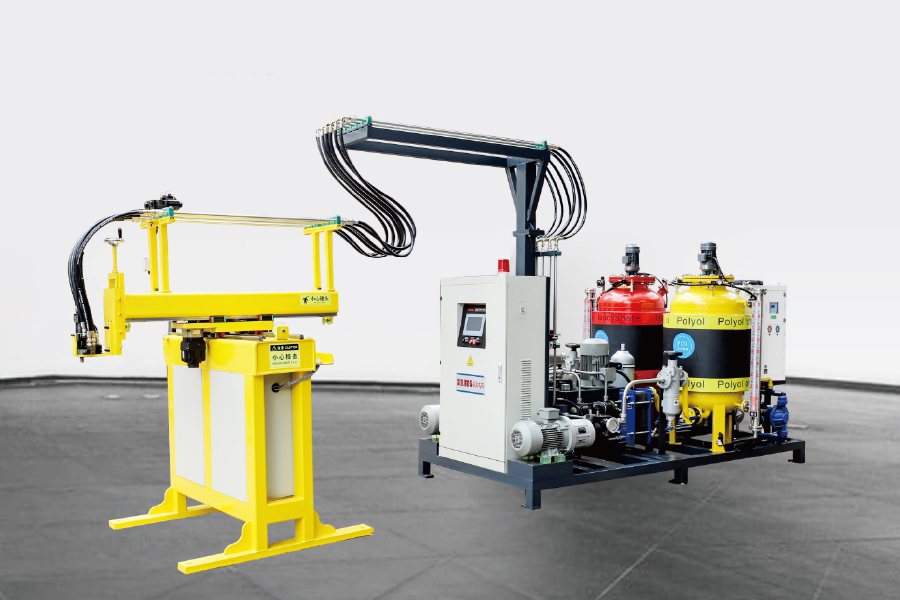
من خلال التحكم في محرك المؤازرة ، باستخدام معالج ثلاثي المحاور ، وبرمجة البرنامج ، والاندماج مع معدا...
انظر التفاصيل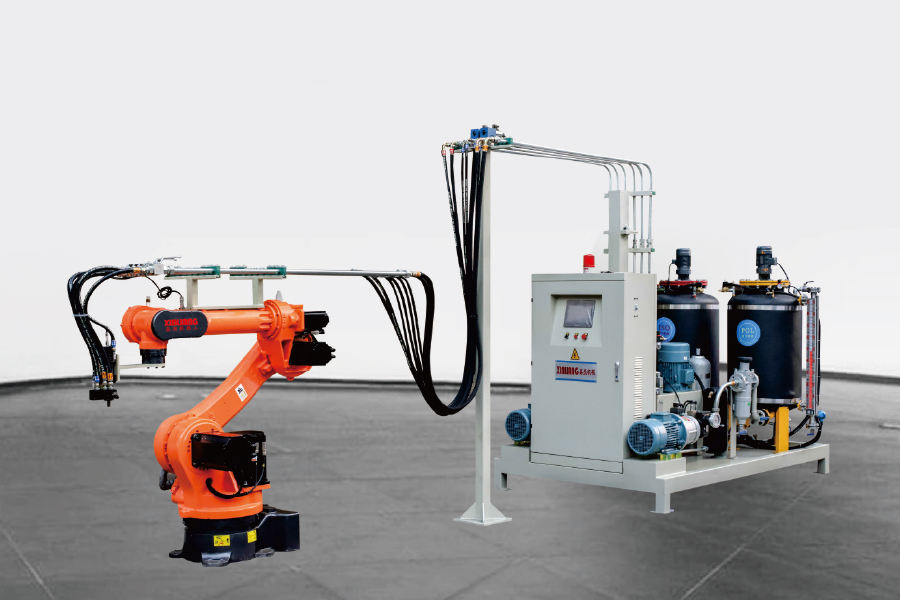
يمكن تخصيص العلامة التجارية الروبوت ، ويتم استخدام المعالج المكون من ستة محاور. إنه مناسب للجمع ب...
انظر التفاصيل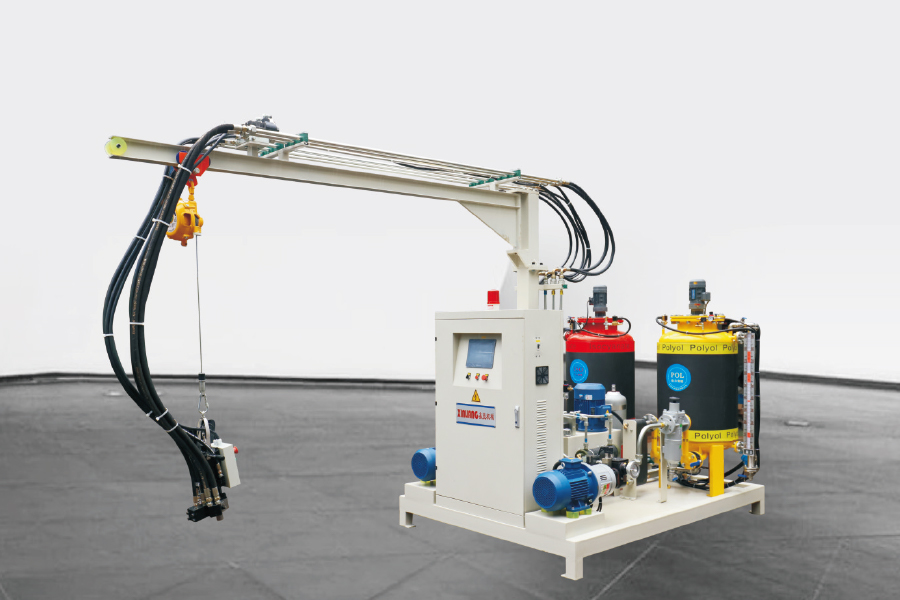
تستخدم آلة حقن البولي يوريثان عالية الضغط عالي الضغط ذراع الروك لحقن الدوران 180 درجة. يمكن تخصيص...
انظر التفاصيل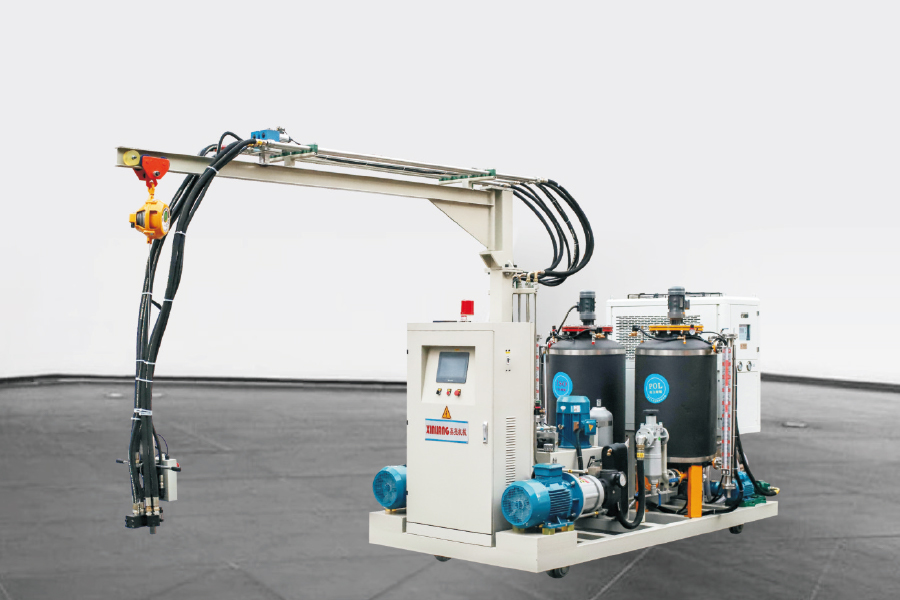
يحتوي آلة حقن الرغوة ذات الضغط العالي المكون من المكونات ذات المكون المكون مع المسار على نفس التك...
انظر التفاصيل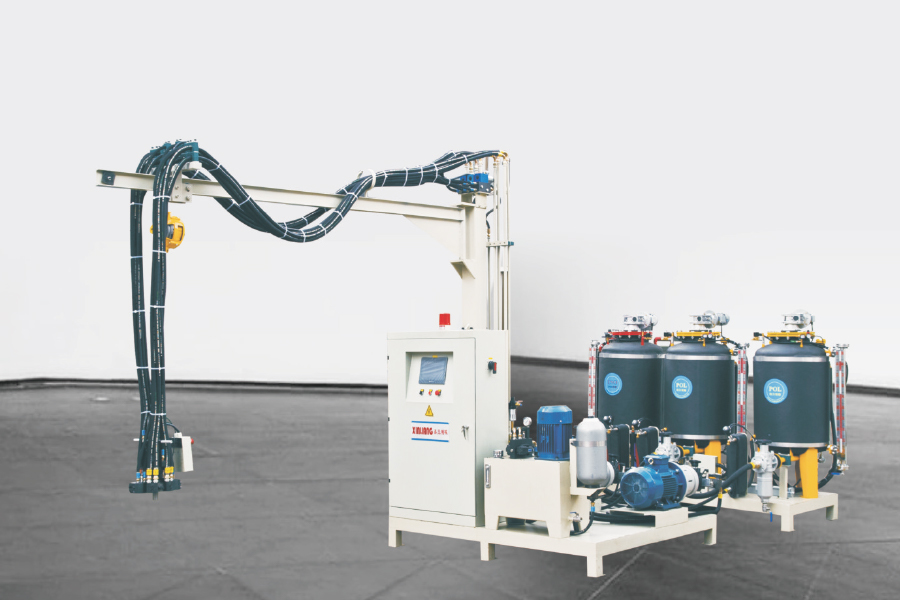
تحتوي آلة حقن الرغوة ذات الضغط العالي المكون من ثلاثة مكونات على خزان ISO 1 و 2 خزانات بولي. يمكن...
انظر التفاصيل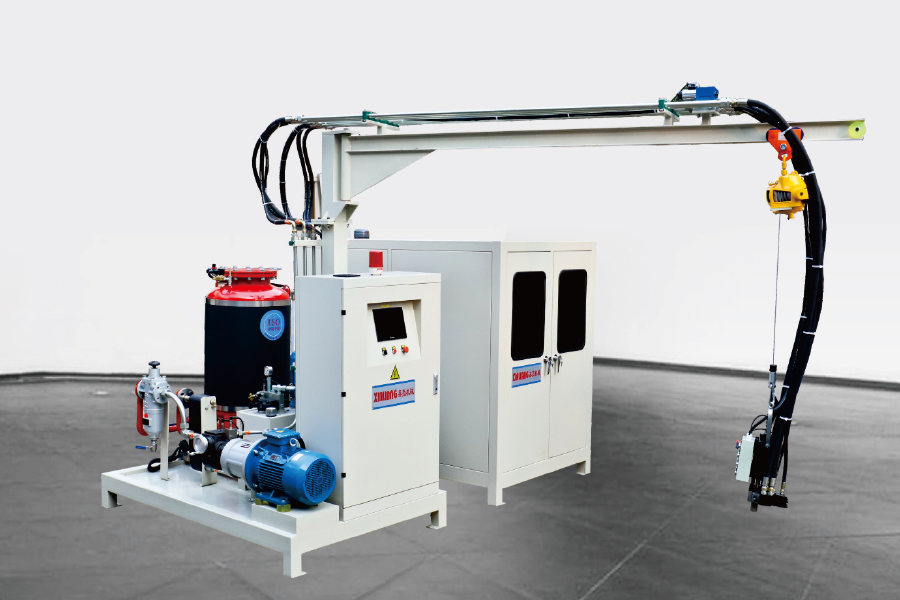
سيكلوبنتان البولي يوريثان ، آلة حقن الرغوة عالية الضغط يعني أن بولي يحتوي على السيكلوبنتان. المواد ا...
انظر التفاصيل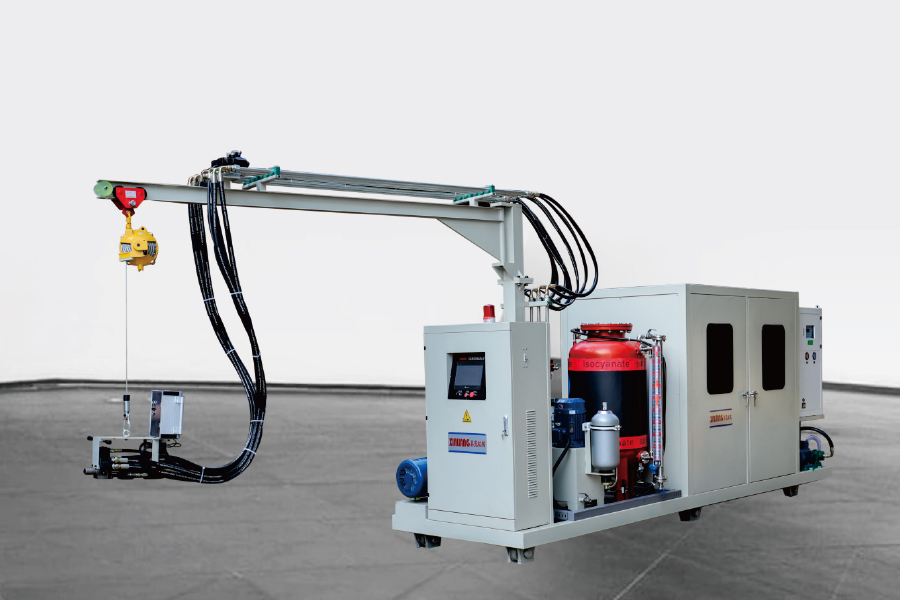
التكوين هو نفس آلة الرغوة ذات الضغط العالي السيكلوبنتان. الفرق الوحيد هو أنه بالنسبة لبعض مصانع العم...
انظر التفاصيل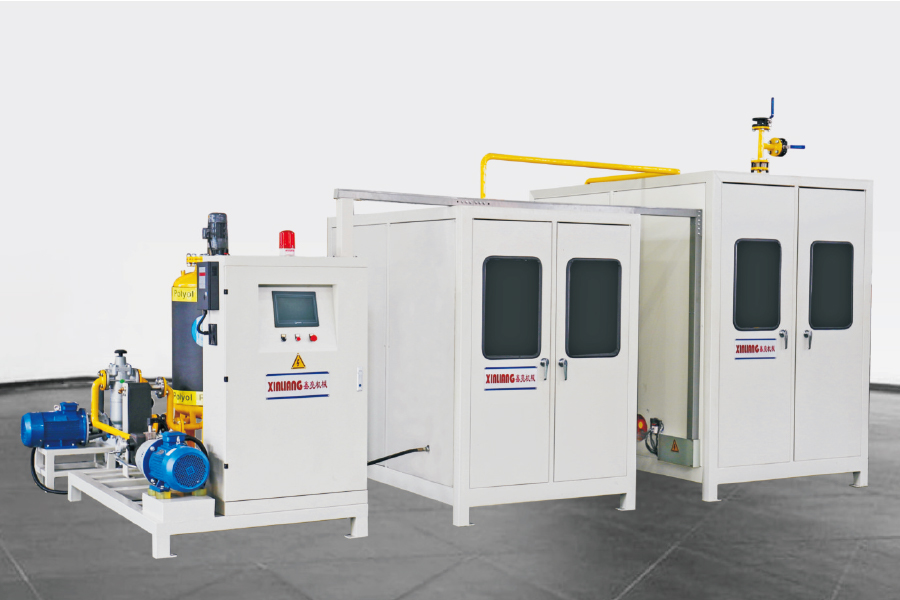
مبدأ العمل لنظام Cyclopentane Premixing قياس وخلط مختلف المواد الخام البولي يوريثان ، مثل الإيزوسيان...
انظر التفاصيل